

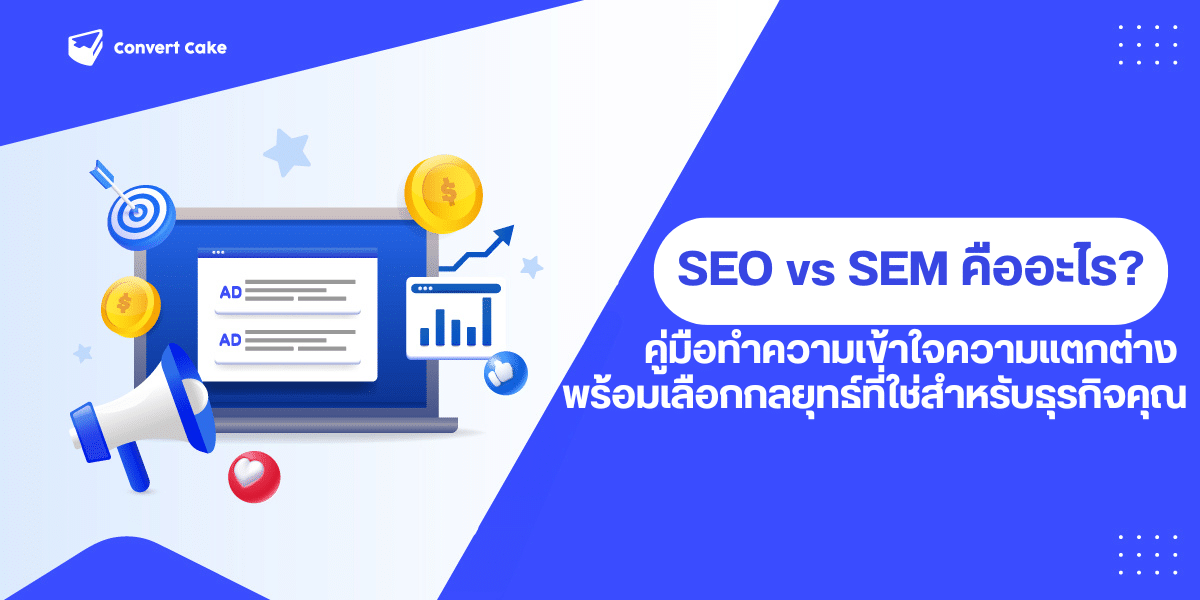
Key Takeaways
- SEO (Search Engine Optimization) is about building long-term credibility to gain sustainable, high-quality traffic without paying for every click.
- SEM (Search Engine Marketing) is the power of immediate visibility, ideal for businesses needing fast results, sales boosts, or product launches through PPC advertising.
- SERP Dominance is the ultimate goal of combining SEO and SEM to occupy all dimensions of the first page and increase customer decision-making opportunities.
- Data Integration, using high-converting keyword data from SEM to develop SEO content, is a shortcut for accurate growth and long-term budget savings.
- AI Search Awareness in modern SEO requires optimizing websites to be “smart” enough for AI to recommend, creating a competitive edge in the new search frontier.
“Where do I start to get more people to see my website?” or “Why are sales still stagnant despite paying for ads?” These simple questions are what business owners often ask themselves when entering the online world. Amidst the confusion between organic ranking and buying ads, the most important thing is not just choosing a tool, but selecting a cost-effective strategy that fits your specific business situation. Especially in an era where AI Search plays a significant role in choosing information for users, optimizing your website so AI can pick it up as a recommendation is a key factor that cannot be overlooked.
This article by Convert Cake, a Performance Marketing Agency with SEO Services in Bangkok, goes beyond just doing SEO. We have accumulated real experience in driving digital sales since 2018. We deeply understand the challenges of budget management and are ready to provide meaty insights so you can choose between SEO and SEM accurately, turning every search into tangible sales.
What is SEO?
SEO (Search Engine Optimization) is the process of improving a website’s quality in the eyes of Google to climb to the first page of Organic Search without paying for ads per click. The ultimate goal in this era is to make algorithms and AI Search accept your website as the most accurate, precise, and reliable answer for users.
A Deep Dive into the Core Pillars of SEO
Powerful SEO relies on a systematic combination of these key elements:
- On-page SEO: Optimizing everything directly on the webpage, from organizing Heading structures (H1-H6) to using keywords naturally and creating high-quality content that satisfies both human readers and AI processing systems.
- Off-page SEO: Building credibility from outside the website through high-quality Backlinks. Having reputable websites link back to you acts as a certificate of authority, which is a crucial factor AI uses to select the real experts in each industry.
- Technical SEO: Laying the backend technical foundation for maximum performance, covering Page Speed, full Mobile-First Indexing support, and structured data management so Google’s Bots can Crawl and index information quickly.
- Long-term Strategy: Understanding that SEO is a marathon, not a sprint. Results may take several months to cultivate, but once ranked, you will own high-quality traffic that flows in continuously and sustainably.
Why Should You Prioritize SEO?
As one of the leading SEO Agencies, Convert Cake views marketing through the Owner’s Perspective. We have found that SEO is the most cost-effective long-term investment for three main reasons:
- Cost-Effectiveness: Compared to buying ads where the Cost-Per-Click (CPC) keeps rising, SEO may have upfront costs for content and technical work, but in the long run, the average cost per visitor drops significantly, saving you a massive marketing budget.
- Brand Authority & Trust: In the age of AI Search, users tend to trust websites appearing in organic results more than ads. Ranking at the top is an automatic declaration of expertise and builds brand trust.
- Sustainable Growth: Unlike ads where traffic stops the moment you stop paying, SEO traffic works for you 24/7. Even when you aren’t updating new content, your website acts as a pro salesperson capturing High-Intent Traffic for your business.
What is SEM?
In today’s digital marketing landscape, SEM (Search Engine Marketing) is often used to refer to paid advertising strategies, commonly known as PPC (Pay-Per-Click). This involves investing in Google Ads space to skyrocket your website to the top position the moment users search for terms related to your business.
How SEM Works: A System of Precision and Bidding
SEM processes focus on speed and tangible results, driven by these core pillars:
- Keyword Bidding System: You select keywords that match your target audience and bid on a price to make your ad appear in the most prominent positions, usually above organic results, clearly marked as “Sponsored.”
- Immediate Visibility: As soon as your campaign is set up and approved, your website appears before users with an immediate intent to buy, without waiting months to build content or rankings.
- Precision Targeting: You can manage your budget freely, whether starting with hundreds or hundreds of thousands. You can also choose to show ads only in specific locations, times, or to specific demographics, ensuring every cent is spent cost-effectively.
The Strengths of SEM: Advantages for Skyrocketing Sales
While SEO focuses on sustainable foundations, SEM is a secret weapon for reaching sales opportunities rapidly, offering these unique advantages:
- Speed and Instant Results: The best tool for launching new products, seasonal promotions, or campaigns needing an immediate sales boost, as it can drive traffic within the first hour.
- Full Flexibility and Control: You can update ad copy, change keywords, or stop the campaign at any time. This agility allows you to adjust strategies according to market competition instantly.
- Detailed Measurement at Every Step: Ad platforms provide analytical tools to see real-time data, from impressions and clicks to actual sales. This helps you calculate the exact ROI of your investment.
At Convert Cake, as one of the leading SEO Agencies, we turn SEM data into a precision strategy by selecting keywords that actually generate profit from ads to develop into SEO content, ensuring your website dominates the first page both through ads and organically.
SEO vs. SEM: Key Differences Comparison Table
To help you visualize resource allocation and accurately forecast ROI, comparing SEO vs. SEM through the dimensions of time, cost, and sustainability is essential. Choosing the right strategy for your business’s timing will save you budget and increase closing opportunities.
Feature | SEO (Organic) | SEM (Paid Search) |
Cost | No cost per click, but involves investment in high-quality content and technical optimization. | Direct cost for every click (Pay-Per-Click), price depends on competition and keyword bidding. |
Time to Results | Long-term Strategy; usually takes 3-6 months of cultivation for stable rankings. | Immediate Results; website can appear at the top as soon as the campaign is approved. |
Placement | Appears in Organic Results below the ad section. | Appears in prominent ad spaces (top or bottom) marked as “Sponsored.” |
Sustainability | Rankings and traffic tend to last long-term even if updates stop temporarily; a growing Digital Asset. | Traffic stops immediately when you stop paying or the daily budget runs out. |
Access Method | Gained through credibility and providing value (Earned Visibility); usually gains higher user trust. | Gained through bidding and buying placement (Bought Visibility) to create rapid awareness. |
Strategic Conclusion: Integrating SEO vs. SEM to Dominate the Market
Understanding these differences isn’t about choosing one over the other, but using them at the right time:
- Build long-term advantage with SEO: If the goal is Brand Authority and reducing long-term costs, SEO makes your brand an expert in the eyes of users and AI.
- Generate urgent profit with SEM: For new campaigns or testing high-competition keywords, SEM acts as a shortcut to send quality traffic to your site instantly.
At Convert Cake, we stick to results measurable by sales, not just ranking numbers. We analyze SEM data for money-making keywords and use them for SEO planning to dominate search results comprehensively.
How Do SEO and SEM Work Together for Maximum Efficiency?
Combining SEO and SEM strategies is not just doing both at once, but creating a supportive system for SERP Dominance, covering every customer touchpoint on the search results page for sustainable success. Here is the deep-dive guideline for integrated success:
1. Use SEM as a Pilot to Find Money-Making Keywords
SEO takes months to bear fruit; SEM is the smartest way to test the market:
- Filter High-Conversion Keywords: Run ad campaigns to see which keywords have the highest conversion rate.
- Reduce SEO Risk: Instead of guessing, use proven data from SEM as topics for SEO content development.
- Test Audience Response: Use SEM to test headlines or call-to-actions (CTR) to apply to SEO Meta Titles and Descriptions.
2. Optimize Quality Score to Reduce Ad Costs
A well-optimized SEO website structure (Good SEO) directly impacts ad quality scores:
- Increase Relevance: When Landing Page content matches keywords according to On-Page SEO, Google Ads Quality Score improves.
- Reduce Cost-Per-Click (CPC): Higher quality scores mean Google views your ads as useful, allowing you to win top spots at lower costs.
- Better User Experience: Technical SEO (fast loading, mobile-friendly) reduces Bounce Rates from ad clicks.
3. Role Division Strategy (Quick Win vs. Sustainable Growth)
- SEM for Urgent Sales: Use for high-intent customers during promotions, new launches, or time-limited campaigns.
- SEO for the Stronghold: While ads work, use SEO to build Authority and accumulate free traffic that stays even after ads stop.
- Always Plug Leaks with Retargeting: Take traffic from SEO (informative visitors) and follow up with SEM ads to close sales for those who haven’t decided yet.
4. Integrated Data Analysis
- Always Share Insights Between Teams: New Search Terms from Google Ads can be turned into SEO articles to capture Informational Intent.
- 360-Degree Competitor Analysis: See which keywords competitors are buying and plan organic rankings for those terms to steal visibility.
Conclusion
Choosing the right strategy starts with analyzing your goals and business status. If you want a solid foundation, long-term Brand Authority, and have a limited monthly ad budget, SEO is the answer for building sustainable digital assets. But if your goal is speed, launching products or promotions for High-Intent customers, SEM acts as the shortcut to appear before them instantly.
At Convert Cake, we view marketing through the Owner’s Perspective, focusing on efficiency and real sales. We don’t just serve SEO Services, we design strategies that blend both tools seamlessly to turn every search into a tangible sale. If you need a partner ready to make digital complexity as easy as a piece of cake, let us transform your website into a precision sales machine 24/7.

Related Blogs
Thailand’s Top SEO Agencies in 2026: The Tested & Reviewed List for Real Organic Growth
What Is Keyword Cannibalization? How to Fix Keyword Overlap to Boost SEO Rankings
