

Key Takeaways
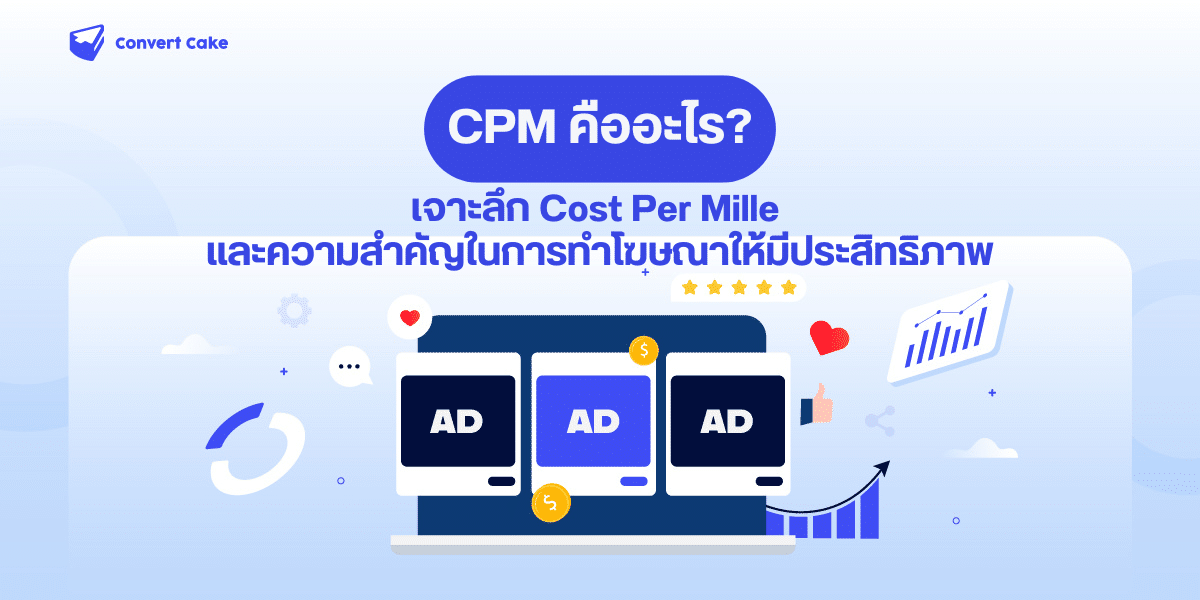
- CPM is the Visibility Metric. What is CPM? It stands for Cost Per Mille, representing the cost per 1,000 ad impressions. It is a critical figure for measuring the efficiency of your ad spend, particularly during the Brand Awareness stage.
- Calculating CPM allows you to clearly estimate the Precise Budget Forecasting required to reach millions. It serves as a benchmark against industry averages to determine if you are overpaying for exposure.
- If you are wondering what CPM is best used for, the answer lies in mass reach for brand recognition or frequency-based Retargeting to ensure your brand stays top-of-mind.
- CPM vs. CPC: Understanding the difference is vital for cost-efficiency. If your creative content is high-quality with a high Click-Through Rate (CTR), choosing CPM advertising can actually make your effective Cost Per Click (CPC) much cheaper than buying clicks directly.
- Is CPM Advertising Effective? This depends entirely on your Creative Score. If your ad is engaging and drives high interaction, platforms will reward you with lower CPM rates, a core strategy Convert Cake uses to manage client budgets.
In today’s landscape, running ads is no longer just about hitting a “Promote” button and waiting for sales. Amidst skyrocketing competition across all platforms, the survival of a business depends on the owner’s ability to read “back-end” data to manage budgets with maximum efficiency.
Many often wonder if their daily ad spend is truly worth it or if their ads are even appearing in front of the right audience. The answer lies in a metric called CPM (Cost Per Mille). As the most fundamental indicator in digital advertising, understanding what is CPM will clarify exactly how much you are paying for every 1,000 times your ad is displayed (Impressions). Furthermore, knowing the best applications for CPM or how it differs from CPC will allow you to execute Paid Media strategies with precision, ensuring no budget is wasted on low-quality views.
At Convert Cake, as a Paid Media specialist team, we prioritize analyzing what is CPM in marketing and how this figure reflects the health of your ads. We ensure every baht invested reaches the right person at the optimal price, turning visibility into sustainable profit.
Table of Contents
What Is CPM? Understanding Cost Per Mille
If you are asking what CPM stands for, the answer is Cost Per Mille. “Mille” is Latin for one thousand. In practice, what is CPM? It is the metric indicating the cost an advertiser pays for every 1,000 times an advertisement is shown (Impressions).
The Meaning of CPM in Marketing
In business, what is CPM in marketing is a measure of reach and awareness efficiency. To understand it, you must distinguish between two core terms:
- Impression: Counted as 1 every time an ad is loaded on a screen, regardless of whether the user notices or clicks it.
- Reach vs. Impression: Reach is the number of unique people who saw the ad. Impression is the total number of times it was displayed. (e.g., if one person sees the same ad 3 times, Reach = 1, Impression = 3). Understanding this helps you manage Frequency so your brand doesn’t become a nuisance to customers.
The Strategic Role of CPM in Marketing Foundations
CPM is a compass for your campaign’s health. It doesn’t just show the price; it reflects three strategic factors:
- Market Competition & Seasonal Trends: Spikes in CPM usually occur during high-competition periods like 11.11 or New Year. Knowing the industry benchmark allows a Paid Media expert to plan around these expensive windows.
- Audience Precision vs. Scale: The more specific or “niche” your targeting, the higher the CPM due to the auction system. Balancing precision with scalability is a vital skill for budget control.
- Creative Quality Score: Modern algorithms (Facebook, TikTok) reward engagement. If your ad stops the scroll, platforms lower your CPM as a reward. A high CPM often indicates your creative isn’t engaging enough.
The C Metric Family: Analyzing for Profitability
To see how CPM differs from CPC and which is most important, you must assemble these strategic pieces:
- CPC (Cost Per Click): The cost per individual click. If you run a CPM campaign with exceptional creative, your effective CPC will be lower than if you had bid for clicks directly.
- CPA (Cost Per Acquisition): The cost to close a sale or generate a lead. This is the “bottom line” that determines profitability. Even if CPM is cheap, if CPA is higher than your profit margin, the campaign is failing.
- CPV (Cost Per View): The gold standard for video (YouTube/TikTok). It measures how long someone watches (e.g., 15-30 seconds), filtering for genuine interest rather than just a fleeting impression.
- CTR (Click-Through Rate): The bridge between visibility (CPM) and action (CPC). A high CTR proves your ad is outstanding, which naturally drives down both CPM and CPC over time.
How to Calculate CPM: Easier Than You Think
Learning how to calculate CPM provides a clear picture of whether your advertising costs are worth it.
The Formula:
CPM = (Total Ad Spend / Total Impressions) x 1,000
Let’s break down how to calculate CPM with a practical example:
Example:
- Total Ad Spend: 5,000 THB
- Total Impressions: 500,000 impressions
Calculation: CPM = (5,000 THB / 500,000 Impressions) x 1,000 CPM = 0.01 x 1,000 CPM = 10 THB
This means you paid 10 THB for every 1,000 times your ad was displayed. You can typically find “Total Ad Spend” and “Total Impressions” directly within the reporting dashboards of your advertising platforms, such as Facebook Ads Manager, Google Ads, or TikTok Ads.
Which Platforms Use CPM?
Before deciding if CPM advertising is the right move for your business, it is vital to understand the nature of each platform. Effective Paid Media isn’t just about finding the cheapest space; it’s about analyzing how each ecosystem impacts visibility quality and conversion opportunities. At Convert Cake, we view platform selection as a strategic chess move to lower ad spend while maximizing brand recall.
1. CPM Advertising on Meta Ads (Facebook & Instagram)
Meta features the most sophisticated algorithm for CPM allocation. Its vast user data allows the system to precisely identify high-quality target audiences.
- Behavior and Quality: Users on Facebook and Instagram engage with ads at a high rate. Consequently, 1,000 impressions here often lead to higher click-throughs or sales compared to other platforms.
- Strategy: Ideal for Retargeting to remind users who visited your site or added items to their cart. It is also perfect for high-quality branding via Feed and Stories.
- Pricing: CPM rates are on the higher side (approx. 250 – 500 THB) and fluctuate heavily during peak seasons. If your creative is low quality (low Relevance Score), the system will drive your CPM even higher to limit its display.
2. CPM Advertising on TikTok Ads
TikTok’s interest-based algorithm allows CPM advertising to reach a massive audience at incredible speed.
- Behavior and Quality: TikTok users are fast scrollers. While it’s easy to rack up millions of impressions, the quality of attention per view may be lower if you fail to hook the viewer within the first 2 seconds.
- Strategy: Best for new product launches requiring massive reach on a limited budget or for Influencer-led campaigns to generate viral momentum quickly.
- Pricing: Very affordable CPMs (approx. 100 – 250 THB). While great for volume, you must be careful with content; if an ad feels too salesy, users will swipe away instantly, rendering the cheap CPM ineffective.
3. CPM on Google Display Network (GDN)
This network spreads your banners across more than 2 million partner websites, blogs, and apps worldwide.
- Behavior: This is passive advertising. Users visit these sites to consume content, not to look at ads, which results in a lower CTR meaning compared to social media ads.
- Strategy: GDN is best for maintaining CPM meaning in advertising consistency. It helps build long-term brand familiarity and trust through constant presence across the web.
- Pricing: The most budget-friendly option ($1 – $3), ideal for maintaining market presence and staying top of mind without exhausting your advertising costs.
4. CPM on YouTube Ads
The CPM in Youtube focuses on immersive, high-impact audio-visual communication on the world’s largest video platform.
- Behavior: YouTube users are often high-intent. They usually watch on larger screens with the sound on, meaning your brand message is communicated more fully than a silent scroll-by on a mobile feed.
- Strategy: We recommend using What is CPM as a bidding strategy for Non-skippable or Bumper Ads (6 seconds). This ensures users see your core message, maximizing Brand Recall.
- Pricing: Moderate pricing, but offers high value for branding. You aren’t just buying views; you are buying the focused attention of your audience.
When Should You Use CPM? Strategic Analysis for Maximum Value
Selecting the right ad metrics for your ads isn’t about personal preference; it’s about Business Timing. Using CPM advertising at the wrong time can lead to a ballooning budget without tangible results. Conversely, when executed at the right moment by a Paid Media team, it can drastically reduce your cost-per-reach and build a long-term competitive advantage. To determine if CPM is the right choice, analyze the following scenarios:
Use CPM (Do) | Avoid CPM (Don’t) |
Top of Funnel (Awareness): When building “Brand Share of Voice” to overshadow competitors. Focus on repeated visibility to build trust before the sale. | Bottom of Funnel (Conversion): When the goal is immediate sales. CPM spreads ads broadly, often reaching people without current purchase intent. |
Omnipresent Retargeting: “Haunting” previous visitors. Paying for CPM among a Warm Audience reinforces brand recall at a lower cost than CPC. | Specific Lead Generation: If you need high-quality data (Names/Phone numbers), CPM may deliver high reach but low conversion, causing your Cost Per Lead (CPL) to spike. |
Tested High-CTR Creatives: When you have a “Winning Creative” proven to get clicks. CPM gives you massive traffic at a significantly lower effective price than paying per click. | Testing New Offers/Products: During the experimental phase where interest is unproven, CPM carries a high risk of paying for views from disinterested users. |
Market Saturation Strategy: Launching a new product into a mass market quickly to seize media space and create “Viral Potential” before competitors react. | Performance-Driven ROI: If your goal is strictly measured by profit per order (ROAS), CPM makes profit calculation more complex than CPA or CPC models. |
Event & Time-Sensitive: Perfect for limited-time campaigns like 24-hour flash sales or event announcements where you need the message seen “now” and by “everyone.” | Low Engagement Content: If content feels too much like a “Hard Sell,” algorithms will push CPM prices higher due to negative feedback, leading to wasted spend. |
Is CPM Advertising Effective? A Deep Dive into Strategic Pros and Cons
The question of whether CPM advertising is good cannot be answered with a simple yes or no; it must be viewed through the lens of the Marketing Funnel. If you are building a strong foundation (Top of Funnel), What Is CPM becomes the answer to cost-effective scaling. However, at the end of the sales funnel (Bottom of Funnel), using CPM without a supporting strategy is like pouring water into a leaking bucket. Below is an in-depth analysis based on the experience of the Paid Media team at Convert Cake, managing million-baht budgets.
Advantages: Why CPM Should Be Your Strategic Strength
- Maximizing Share of Voice: It allows brands to secure massive Ad Inventory at an average cost significantly lower than traditional media. It’s ideal for carpet-bombing a key message to millions in a short window.
- The “Low CPM + High CTR = Winning Strategy” Mechanism: This is the pro-level secret. If your creative is powerful enough that your Click-Through Rate (CTR) exceeds industry averages, choosing CPM will make your Effective CPC incredibly cheap because the price per 1,000 impressions remains fixed while your traffic multiplies.
- The Power of Frequency & Brand Recall: Psychological principles state that repetition leads to trust. CPM is the only model that allows you to efficiently manage Frequency per user, ensuring customers don’t forget your brand when they are finally ready to buy.
Limitations: What Businesses Must Watch Before Running Ads
- Risk of Passive Exposure: You must understand that CPM counts an impression the moment an ad loads. Even if a user scrolls past in a split second (Low Viewability), you are still charged. This number does not always guarantee purchase intent.
- ROI Measurement Gap: For sales-focused campaigns, CPM can lead you to chase Vanity Metrics, high view counts without actual orders. If your audience is too broad or irrelevant, those millions of impressions become wasted ad spend.
- Creative Dependency: CPM delivers the best results only when paired with high-quality creative and precise targeting. If you aren’t sure if your content is engaging enough, consulting a Paid Media expert can mitigate the risk of paying for wasted impressions.
What Goals Is CPM Best For? Analyzing Strategy by Customer Journey
In result-oriented marketing planning, advertisers don’t just look at skyrocketing view counts; they look at budget efficiency at every stage of the Customer Journey. A Paid Media team typically selects CPM for core objectives that generate strategic value as follows:
1. Building Brand Identity and Foundation (Brand Awareness & Identity)
In the early stages, when the target audience is unfamiliar with your brand, making your name, logo, and identity visible (Brand Recall) is the primary goal. Choosing CPM advertising allows you to carpet-bomb a message, embedding the brand in the audience’s initial memory without the pressure of an immediate click, a strategy that reduces “mental friction” for consumers.
Example: A new cosmetics brand uses CPM to show high-impact visuals of models with their products. This builds familiarity with the packaging and brand aesthetic before the customer encounters the physical product at a counter or online store, significantly increasing the likelihood of a future purchase.
2. Maximizing Rapid Mass Reach (Mass Reach Maximization)
When there is a critical message to broadcast within a limited timeframe, such as an 11.11 campaign or a new branch opening, What Is CPM becomes your most powerful tool. The system focuses on distributing ads to unique users (Unique Reach) as widely as the budget allows, helping the brand dominate the Share of Voice over competitors during high-stakes periods.
Example: A restaurant opening a new location in a business district uses CPM to target a 5km radius. Within the first 3 days, residents and workers are made aware of the opening and promotions, driving rapid foot traffic to the store.
3. Precision Retargeting for Conversion (Precision Retargeting)
According to marketing psychology, consumers often need to see an ad an average of 3-7 times before gaining enough confidence to make a purchase. CPM is a premier tool for Retargeting to remind Warm Audiences, those who showed interest but didn’t finish the purchase. This keeps your brand Top of Mind at a lower cost than hunting for new Cold Audiences.
Example: A travel booking site displays ads of a specific hotel a customer previously viewed using a CPM model. The ad serves as a nudge: “The room you liked is still available” or “Only 2 rooms left,” ultimately leading to a completed booking.
4. Leveraging Winning Creatives (High-CTR Strategy)
This is the profit gap that Paid Media pros use to gain an edge. If an ad creative is so high-quality that it stops the scroll and drives massive clicks (High CTR), paying via CPM becomes incredibly cost-effective. Since the price per 1,000 impressions is fixed, the influx of clicks drives your Effective CPC down much lower than if you had paid for clicks directly.
Example: A video campaign featuring funny or highly educational content goes viral and gets shared. Using CPM allows you to pull massive traffic to your website at an average price that is 2-3x cheaper than a standard traffic campaign.
5. Establishing Authority Through Content (Authority & Content Promotion)
Ideal for B2B or service-based businesses that require high levels of trust before a decision is made. Using CPM to promote deep-dive content, storytelling videos, or educational articles helps pull the target audience into the brand’s “ecosystem” at an affordable price, building a long-term image as an industry expert.
Example: An aesthetic clinic uses CPM to promote a video titled “Deep Dive into Choosing Safe Fillers.” This builds Trust and allows customers to sense the clinic’s professionalism before they eventually move to inquire via chat or book a service.
Factors Influencing CPM and How to Lower Costs
In a data-driven marketing world, What Is CPM in marketing is more than just a number showing actual costs; CPM is a critical forecasting tool and benchmark for campaign efficiency. This metric indicates whether a business is overpaying for reach or managing costs more effectively than the industry average. These insights allow executives to plan budget strategies precisely in a highly competitive battlefield.
Furthermore, CPM reflects Ad Placement Value, helping you identify which channels deliver the most powerful reach. For Awareness campaigns, where the Impression module is the heart of measurement, controlling CPM advertising costs while maintaining visibility quality is essential.
Key Factors Impacting Your CPM
- Target Audience: Highly specific groups or audiences in high-purchasing-power regions often command a higher CPM due to intense advertiser competition.
- Ad Platform: CPM in digital marketing varies significantly across platforms. Facebook, TikTok, and Google each have different natural cost floors and premium placements.
- Ad Placement: Where your ad appears (e.g., In-feed, Stories, Search Results, or Display Network) directly impacts your advertising costs.
- Seasonality: During major shopping events like Black Friday or year-end holidays, ad space becomes more expensive as demand peaks, driving up CPM.
- Ad Quality & Relevance Score: Platforms reward high-quality, relevant ads with lower CPMs. Conversely, unengaging ads or those receiving negative feedback will face higher costs.
- Bidding Strategy: Your chosen method (Automatic vs. Manual Bidding) and set budget influence how competitively you can purchase impressions.
- Competition: The sheer number of advertisers vying for the same audience in the same space directly dictates CPM in advertising rates.
Strategies to Reduce Your CPM
- Improve Ad Creative & Copy: Designing visually stunning ads with compelling copy increases your Relevance Score. High engagement signals the platform to lower your advertising costs as a reward for quality content.
- Refine Targeting: While broad targeting might seem cheaper initially, focusing on a truly relevant audience creates higher engagement, improving ad quality scores over the long term.
- Continuous A/B Testing: Regularly test different headlines, images, videos, and CTAs to discover what resonates most with your audience for the best value.
- Optimize Landing Pages (Indirect): A seamless landing page experience leads to higher conversion rates and better relevance scores, which can indirectly lower your CPM.
- Schedule Ads Effectively: Run your CPM advertising during peak times when your target audience is most active to avoid wasted spend during low-engagement hours.
- Leverage AI-Powered Tools: At Convert Cake, we utilize advanced AI tools for Nano-Influencer Scaling. This method can reduce CPC by up to 50% by working with a high volume of smaller influencers. This cutting-edge strategy doesn’t just lower costs, it boosts authentic engagement and ensures your impressions hold real value.
CPM vs. CPC vs. CPA: Which Metric Best Fits Your Business Goals?
In a proactive Paid Media strategy, CPM, CPC, and CPA are three fundamental metrics that play entirely different roles. To scale a Winning Product, you must understand how each metric functions and exactly when to deploy them within the Customer Journey to ensure every dollar of your ad spend yields the highest possible return.
Selecting the wrong metric can be costly. For example, using CPM to expect immediate sales from a “cold” audience who doesn’t know your brand yet often leads to budget drain with zero momentum. Conversely, using CPA for a brand awareness campaign might result in your ads not being shown at all, as the system struggles to find converters for an unknown brand. At Convert Cake, deep-diving into these strategic differences is our first priority.
Strategic Comparison Table: Key Advertising Metrics
Metric | Definition | Ideal Use Case | Core KPI |
CPM | Cost Per Mille (Pay per 1,000 Impressions) | Brand Awareness & Reach: Launching new products, building “carpet-bomb” visibility, or Retargeting to maintain brand presence. | Visual Impact: Reach, Impressions, and Brand Recall. |
CPC | Cost Per Click (Pay per individual click) | Traffic & Consideration: Driving interested users to a website for more info, increasing engagement, or filtering high-intent audiences. | Interest & Traffic: Landing Page visits and Click-Through Rate (CTR). |
CPA | Cost Per Acquisition (Pay per action/conversion) | Conversion & Performance: Closing Direct Sales, securing newsletter sign-ups, or collecting high-quality leads for sales teams. | Action & ROI: Direct profit and tangible conversions. |
Strategic Case Study: Applying CPM in Real Estate to Close the Sale
In high-value industries with long decision cycles, such as Real Estate, CPM reflects a strategic approach to meeting customers at each emotional stage of their Buying Journey. Our Paid Media experts manage budgets by segmenting metrics based on real-world application:
1. Awareness Stage: Creating Visual Dominance
During a new project launch or Pre-sale, the primary goal is to maximize the project’s name recognition within a specific location. Using CPM advertising here allows us to carpet-bomb the market with luxury visuals of the clubhouse or prime location.
- Strategy: Run high-resolution perspective ads. Set Frequency to ensure the target audience sees the ad 3–5 times per week.
- Result: Builds subconscious Brand Recall. When a prospect drives past the site or sees a billboard, they already feel a sense of trust and familiarity.
2. Consideration Stage: The High-CTR Hack
Once awareness is established, the brand shifts to CPC to drive high-intent users to floor plans or unit details. However, we use a pro-level CPM hack here to lower costs.
- Strategy: Take a high-performing “Home Tour” video that already has great organic engagement and promote it via CPM.
- Result: Because the content is genuinely engaging, the high CTR naturally drives the Effective CPC down to be 2–3x cheaper than if we had bid for traffic directly.
3. Conversion Stage: Driving Bookings via CPA
The ultimate goal is site-visit registrations (Leads). CPA is the final metric that tells us the exact cost of acquiring one customer’s name and contact info.
- Strategy: Set up Conversion campaigns targeting Lookalike Audiences of past buyers or those who spent significant time on the Price & Promotion page.
- Result: A successful high-performance campaign that turns ad spend into actual sales opportunities (Qualified Leads).
4. Retargeting Stage: Closing the Deal with Precision Remind
For prospects who visited the site but didn’t register, CPM serves as a low-cost tool to stay Top of Mind and push them toward a decision.
- Strategy: Serve “Last Chance” or “Exclusive $10,000 Discount” graphics via CPM to those who visited the landing page in the last 30 days.
- Result: Triggers FOMO (Fear of Missing Out), leading to site visits at a much lower reach-cost than hunting for new leads.
Success in Real Estate marketing isn’t about dumping money into a single metric. It is the strategic blend of CPM for brand authority, and CPC/CPA for traffic and closing. Convert Cake recommends a holistic approach managed by professionals who understand buyer behavior at every click.
Conclusion
Understanding CPM is the critical first step in controlling your ad spend and managing campaigns for maximum efficiency. While CPM in marketing serves as a foundational metric for evaluating initial reach and budget allocation, in the modern world of Performance Marketing, this figure is merely one piece of a much deeper strategic puzzle.
At Convert Cake, as a Paid Media specialist, we firmly believe that massive Impression numbers are meaningless if they cannot be converted into tangible business results. Our expert team doesn’t stop at just reporting statistics; we take those insights and perform deep-dive analyses alongside other metrics throughout the entire Sales Funnel. This ensures your brand isn’t just a fleeting glance in a feed, but a meaningful connection reaching the right person at the perfect moment.
FAQ
What is CPM and when should it be used?
CPM stands for Cost Per Mille, which is the cost per 1,000 ad impressions. It should be used when you want to distribute information as widely as possible or build brand recognition. In various sectors, you might hear different terms like CPM meaning in manufacturing or CPM meaning in construction, but in digital advertising, it is strictly about reach.
Between CPM and CPC, which is more cost-effective?
It depends on your goal. If you want Awareness, CPM advertising is more cost-effective. However, if you are looking for direct sales or website traffic, CPC is usually more precise. Knowing CPM meaning in digital marketing helps you choose the model that ensures your advertising costs are never wasted.
Is CPM advertising good for a startup business?
Absolutely. CPM advertising is excellent for startups because it helps open up massive visibility at an accessible budget, building initial credibility before you transition into high-stakes conversion campaigns.
What is a normal CPM rate?
There is no fixed normal number. CPM advertising costs depend heavily on the industry and platform, for example, CPM meaning in facebook may differ from CPM meaning youtube. You should always use market benchmarking to evaluate your true performance.
What should I do if my CPM is abnormally high?
Start by performing a Refresh Creative to fix Ad Fatigue (when people get bored of seeing the same ad). If that doesn’t work, try broadening your target audience to reduce auction competition and refine your Offer to stand out. Improving your CTR meaning signals to the platform that your ad is high-quality, which triggers the system to lower your CPM automatically.

Related Blogs
What is Bumper Ads? How to Create 6-Second Ads That Hit the Mark, Boost Views, and Drive Sales
What Are Facebook Messenger Ads? How to Turn Ad Views into Real Sales
