

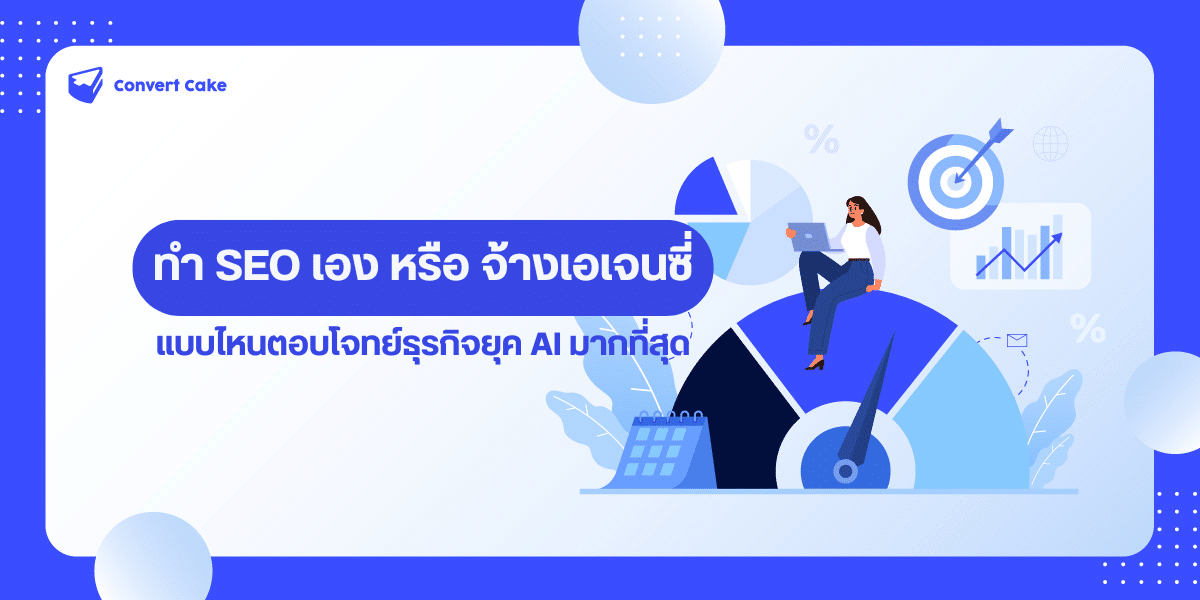
Key Takeaways
- When considering DIY SEO vs Agency, the reality is that executing SEO in-house is entirely possible at a foundational level. However, it requires a massive trade-off in terms of time, focus, and the continuous overhead of tracking Google’s rapidly shifting core algorithm updates.
- Weighing whether to proceed with DIY SEO vs Agency isn’t merely a debate about technical execution or skill sets. Instead, it is an executive-level evaluation of the opportunity cost imposed on your internal marketing team.
- For enterprises and fast-growing businesses looking to scale revenue exponentially and dominate the search landscape for the long term, investing in white-hat SEO Services yields the highest return on marketing spend.
In today’s hyper-competitive digital marketplace, relying solely on volatile, high-priced paid ads is a fast track to shrinking net margins. To engineer a sustainable, compounding stream of high-intent buyers, businesses must master the organic search landscape. However, scaling an organic funnel introduces a critical operational crossroad for founders and marketing executives alike: DIY SEO vs Agency management.
While bootstrapping your search strategy internally seems like a cost-effective starting point, modern search engine optimization has evolved far beyond surface-level content and basic keyword stuffing. Winning on page one now demands a flawless blend of complex backend technical engineering, advanced schema architectures, and data ecosystems optimized for Google AI Overview systems.
To help your organization maximize its marketing return on investment (ROI) and avoid costly operational missteps, this guide strips away the marketing fluff. We break down the absolute reality of what it takes to execute search optimization in-house versus outsourcing your growth to enterprise-grade SEO Services from Convert Cake.
Table of Contents
What is SEO and Can You Do DIY SEO?
Before stepping into the decision-making framework of whether your business should execute DIY SEO vs Agency management, an organization must align on how search engine mechanics actually operate. Evaluating if you can handle search optimization internally, or determining your position in the DIY SEO vs Agency debate, is impossible without knowing the exact criteria Google uses to pull a website onto the first page.
To put it into perspective, SEO (Search Engine Optimization) is the continuous process of optimizing a website’s architectural structure and content ecosystem. The goal is to prove to search engine algorithms (primarily Google) that your web asset is authoritative, highly valuable, and the absolute best answer available for a user’s search query.
When determining your route between DIY SEO vs Agency frameworks, you must realize that Google processes your web pages through 3 core systematic steps:
- Crawl (Data Extraction): Google’s automated software robots (Googlebots) perpetually traverse links across the global internet to discover, read, and download the source code, text assets, and media files of new or updated webpages into their servers.
- Index (Data Categorization): The crawled data is parsed, analyzed for contextual meaning, filtered for quality, and stored within a colossal centralized database. Think of this stage as classifying an incoming book into the precise shelf of the world’s largest digital library.
- Rank (Value Evaluation): The moment a user types a query, Google evaluates hundreds of historical ranking signals alongside modern Google AI Overview systems to extract pages that answer the user’s intent with depth and lightning-fast loading speed, displaying them in order of relevance.
While performing foundational tasks like writing blog posts or adjusting basic on-page configurations in-house is fully achievable, solo operations typically hit a glass ceiling once rankings begin to climb. Modern search optimization looks far beyond surface-level content; it is governed by deep backend technical engineering, which dictates your site’s ultimate ranking ceiling.
What Does DIY SEO Entail and Where Do You Begin?
A highly common crossroad for founders and in-house marketing generalists is assessing whether they can successfully drive organic growth without allocating capital to external suppliers from day one.
In reality, executing an in-house strategy is entirely viable, particularly when managing On-Page SEO content assets. No external provider understands your internal product nuances or customer pain points better than your own team. However, bootstrapping this process comes with a distinct set of operational barriers.
Establish the Scope: Initial Workflows the In-house Team Can Launch Immediately
If your organization commits to a self-managed roadmap, the internal marketing team can establish the initial foundation by leveraging existing internal hours across 3 primary buckets:
- Deploying Foundational Analytics: Setting up Google Search Console to monitor technical site health and indexing statuses, alongside configuring Google Analytics 4 (GA4) to track user behavior patterns post-click.
- Initial Keyword Research: Harvesting actual user queries directly from your sales or customer service teams and mapping those real-world data points into an organized content production pipeline.
- High-Value Content Production: Drafting comprehensive user guides, deep-dive product comparisons, or authoritative answer hubs that satisfy Google’s strict E-E-A-T (Experience, Expertise, Authoritativeness, Trustworthiness) guidelines to provide genuine value to the consumer.
Technical Roadblocks Where Beginners Usually Hit a Wall
While handling content internally is a great starting point, a self-managed site will quickly run directly into complex Technical SEO limitations as impressions scale. This technical wall is where most in-house teams stall out:
- Bloated Source Code Architecture: Legacy, non-standard backend web code restricts Google crawlers from efficiently reading your site, capping your ranking potential regardless of content quality.
- Failing Global Core Web Vitals: Sub-par server configurations or unoptimized scripts cause slow page load speeds. This actively drops your rank and drives high-intent users straight to your competitors.
- Lack of AI Structural Connections: Omitting advanced Schema Markup data prevents search engine AI bots from cleanly parsing your pages, rendering your content invisible to zero-click searches and automated answer engines.
Resolving these backend engineering flaws requires a sophisticated blend of web development knowledge and expensive data analysis suites. Because these requirements quickly exceed the capabilities of traditional multi-tasking marketing teams, most growing businesses eventually transition into evaluating a partner to secure professional SEO Services.
DIY SEO vs Agency Cost and Output Analysis
As an enterprise targets a higher volume of qualified inbound leads and verified sales, choosing between internal management and external scaling through the lens of DIY SEO vs Agency dynamics becomes a critical financial assessment. Modern search supremacy is no longer won through content volume alone; success is dictating by real-time data access, operational consistency, and algorithmic risk mitigation.
Evaluating the competitive friction of DIY SEO vs Agency frameworks reveals massive divides across 3 distinct pillars:
Pillar 1: Enterprise-Grade Analytics Capabilities (SEO Tools)
- DIY / In-house: Typically constrained to free diagnostic dashboards like Google Search Console. While helpful for basic health monitoring, these tools provide zero visibility into your competitors’ hidden keyword strategies, backlink profiles, or content gaps.
- Expert Agency: Backed by thousands of dollars in annual enterprise software licensing (such as Ahrefs, SEMrush, Screaming Frog, and SurferSEO). These professional platforms allow engineers to dissect competitor traffic flow, map historical link structural systems, and build precise ranking blueprints based on hard market data.
Pillar 2: Operational Focus and Consistency
- DIY / In-house: Internal staff are almost always marketing generalists forced to split finite hours across diverse tasks (running paid ads, managing social channels, designing graphics, and answering incoming leads). Consequently, long-term technical site optimization and rigorous content publishing pipelines fall by the wayside, causing rankings to fluctuate violently.
Expert Agency: Operates through highly focused, dedicated squads. Your site is managed by specialized Technical SEO Architects, dedicated Content Creators, and Link Building Specialists whose sole professional mandate is to continuously audit, optimize, and push your web assets to the top of page one every single week.
Pillar 3: Revenue Velocity and Algorithmic Security (Speed & Risk)
- DIY / In-house: Growth trajectories are significantly slower due to inevitable trial-and-error learning curves. Furthermore, a lack of deep algorithmic knowledge introduces a high risk of accidentally deploying outdated or gray-hat techniques (such as over-optimizing keyword density or acquiring toxic link packages), which triggers severe Google Penalties that can completely scrub your domain from search results.
- Expert Agency: Executes clean, sustainable, white-hat strategies mapped out via proven deployment roadmaps. This systematically accelerates your journey to page one while maintaining ironclad safety against penalties, quickly turning raw organic traffic into a stable, high-converting revenue driver.
Pros and Critical Warnings of Hiring an SEO Agency
For leadership teams currently weighing whether to handle operations via internal teams or out-source, mapping out the precise workflow deliverables of a professional team allows you to accurately measure your return on marketing investment.
Retaining an elite partner for specialized 15 Top SEO Agencies in Thailand 2026 is not a monthly line-item expense for simple copywriting. It is an investment in a dedicated team of marketing engineers who re-architect your business’s entire digital footprint. To ensure complete clarity before signing an agreement, use this diagnostic matrix outlining the structural pros you should expect alongside the critical warning signs to watch out for when vetting providers:
Core Operational Focus | Business Driving Advantages (Pros) | Critical Warning Signs to Audit (Cons / Warnings) |
1. Technical SEO & Web Engineering | 100% Normalized Backend Code: Engineers completely overhaul your site architecture, structure clean Robots.txt directives, optimize server crawl budgets, and maximize load velocities to meet Core Web Vitals standards. This ensures frictionless data indexing for both standard crawlers and modern AI search engines. | Unmonitored Core Functionality Changes: Agencies that modify core source code or migrate servers without a deep understanding of your operational infrastructure risk introducing bugs into active shopping carts or breaking your legacy lead generation pipelines. |
2. Commercial Content Architecture | High-Intent Revenue Mapping: The agency targets lucrative, high-intent transactional search terms (e.g., keywords featuring “pricing,” “buy,” or “best provider”) to attract buyer traffic. They architect clear heading hierarchies ($H1, H2, H3$) and write compelling Meta Tags to maximize Click-Through Rates (CTR). | Superficial, Low-Insight Copywriting: If an agency fails to run deep target-market alignment workshops with your team, they will produce content that meets generic technical criteria but lacks actual industry authority. This fails to convince real prospects and destroys your conversion rates. |
3. Off-Page Authority Systems | Industry-Leading Trust Positioning: The team builds clean internal linking webs to distribute authority across your site, coupled with a deliberate process of earning premium, contextually relevant Backlinks from verified, high-authority domains (White-Hat SEO) to anchor long-term rankings. | Catastrophic Gray/Black-Hat Practices: Be highly critical of any vendor offering cheap link velocity packages or utilizing automated Private Blog Networks (PBNs). These shortcuts trigger automated algorithmic spam filters (Google Penalties) that can permanently delist your site. |
4. Data Analytics & Conversion ROI | Transparent, Dollar-for-Dollar Attributable Growth: By hardcoding end-to-end conversion tracking systems directly through Google Analytics 4 (GA4), the agency provides leadership with clear data proving exactly what percentage of organic search traffic converts into bottom-line revenue. | Vanity Metric Reporting Focus: Low-tier agencies often obscure a lack of conversions by filling monthly reports with vanity metrics, such as total impressions or rankings for zero-volume keywords that have zero commercial intent and generate zero sales. |
If your corporate goal is to completely bypass the trial-and-error phase of the DIY SEO vs Agency equation to scale customer acquisition quickly, partnering with verified experts is undeniably the most cost-effective decision. However, stakeholders must actively use the analytical framework above to aggressively audit a provider’s strategic roadmap. This protects your capital from being wasted on high-risk tactics that endanger your digital assets over the long term.
Conclusion
When analyzing the search landscape, there is no single cookie-cutter blueprint that fits every enterprise; the answer relies entirely on your current operational scale, internal talent pool, and immediate corporate timeline. Managing search visibility entirely in-house serves as a fantastic, low-overhead sandbox for testing early market hypotheses when capital is tight. However, if your brand is scaling up and actively entering a competitive arena to claim market share, out-capturing well-funded incumbents demands a dedicated execution squad.
If your enterprise is ready to eliminate the financial drag of trial-and-error marketing and transform your standard website into a highly predictable, inbound cash-flow asset:
Convert Cake stands as a data-first digital growth agency driven exclusively by commercial outputs and proven bottom-line revenue. We step in as your strategic partner to deliver enterprise-grade, clean white-hat SEO Services engineered correctly from day one. Our team builds authoritative content architectures structured to capitalize on both traditional search engine algorithms and modern Google AI Overview structures, turning raw searches into sustainable, compounding profitability for your business.
FAQ
Is it realistic to choose DIY SEO vs Agency management if we only have a general marketing team?
Only for the basics. An in-house team can handle initial keyword research and basic content writing. However, they will quickly hit a ceiling when it comes to Technical SEO and advanced data analysis. Generalists have to split their time across social media, paid ads, and graphics, whereas an agency provides a dedicated squad focused purely on driving your search rankings every single day.
What are the hidden risks of attempting to do SEO entirely in-house?
The biggest risk is hitting an accidental Google Penalty that wipes your site from search results. Because search algorithms change rapidly, an in-house team relying on trial-and-error can easily make critical mistakes, like keyword stuffing or acquiring low-quality backlinks. Professional SEO Services eliminate this risk by deploying clean, algorithm-safe, white-hat roadmaps.
When is the exact right time to transition from DIY SEO to professional SEO Services?
When your rankings plateau or your team loses focus on their primary jobs. If your target keywords have been stuck on page 2 or 3 for over six months, you are facing backend architectural flaws that require specialists. Furthermore, if your team is wasting hours fixing code and site speeds instead of closing sales, the opportunity cost means it is time to outsource.

Related Blogs
What Is Keyword Cannibalization? How to Fix Keyword Overlap to Boost SEO Rankings
What Is Knowledge Graph? How Google Understands Website Data Better
