

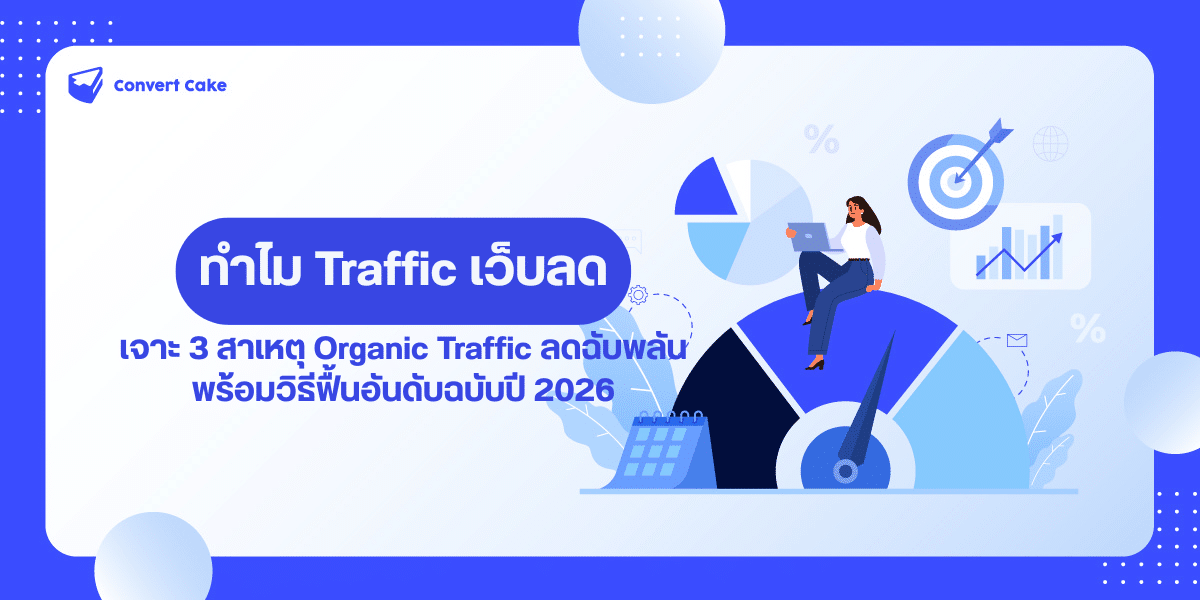
Key Takeaways
- A web traffic decline is a natural occurrence within search engine ecosystems, but a sudden drop in organic traffic is usually triggered by three core factors: shifting user behavior, stronger competitors, and core algorithm overhauls (Core Updates).
- In 2026, traditional content creation methods are no longer sufficient. The integration of AI Overviews has fundamentally transformed user search intent, acting as a massive catalyst for a sudden drop in organic traffic for platforms that fail to adapt.
- The ultimate remedy for a website with no traffic is executing a comprehensive Content Audit alongside a technical Website Audit. This allows you to repair areas flagged as unhelpful to users and effectively halt a continuous web traffic decline.
Why are you experiencing a web traffic decline? What is causing your platform to turn into a website with no traffic, or why are your search rankings continually tumbling despite consistently producing SEO content? You have likely faced these frustrating scenarios before. When your backend analytics metrics plummet, stress and anxiety naturally follow, especially for businesses that rely heavily on digital revenue channels, where a sudden drop in organic traffic can translate into massive financial losses in the blink of an eye.
This article will dive deep into the 3 critical reasons behind plunging page views, offering the latest updated guidelines and defense strategies to transform a quiet site back into a bustling digital storefront. However, if an initial inspection leaves you uncertain about where the flaws lie, opting for professional Convert Cake’s SEO Services is a proven shortcut to analyze your backend architecture and pivot your strategy to reverse this crisis accurately and sustainably.
Table of Contents
3 Main Causes of Web Traffic Decline
Before diving into the root causes of these issues, it is essential to understand the foundational framework of this ecosystem. SEO (Search Engine Optimization) is the systematic process of optimizing a website and its content to align with search engine algorithms, ultimately pushing pages to the first page. The reward for this optimization is organic traffic, the natural influx of visitors who find your site without relying on paid advertising. This traffic segment holds immense value for businesses because these users possess clear intent and are actively seeking solutions, giving them the highest potential to convert into paying customers. Dominating top rankings is therefore equivalent to establishing a physical storefront on prime real estate with high foot traffic around the clock.
However, the nature of SEO is inherently volatile and constantly shifting. Rankings that were once secure can fluctuate due to a wide array of surrounding variables. This exact volatility is why most business owners choose to hand over the reins to professionals from Convert Cake, one of the Top SEO Agencies in Thailand 2026 to manage their long-term growth. Consequently, whenever analytics point to a web traffic decline exclusively across organic channels, or a sudden drop in organic traffic leaves you with a website with no traffic, the root causes usually narrow down to 3 major in-depth factors:
1. Web Traffic Decline Due to Shifting Search Intent and the Rise of AI Overviews (Zero-Click Searches)
The exact same search terms and keywords may remain, but what has fundamentally changed is the user’s underlying search intent. As time passes, consumer needs and deep-seated interests naturally evolve. This is especially true today, as search engine landscapes are fully driven by AI Overviews. The algorithm can effortlessly scrape content from various websites, process it, and generate a comprehensive summary directly on the first page of search results.
This shift in user behavior triggers a phenomenon known as “Zero-Click Searches,” where users get their answers fully without needing to click through to any website. This directly causes a web traffic decline, even if your article retains its original ranking position.
Furthermore, generational transitions cause the search volume of certain keywords to shrink. For instance, an article providing information on older technology like the MacBook Pro M1 will experience a natural drop-off over time as user interest migrates toward newer models like the MacBook Pro M2 or later generations. If the website content is not revised or updated to keep pace with new demands, organic traffic will inevitably wither away over time.
2. Web Traffic Decline Due to Stronger Competitors and Content Degradation
SEO is a relentless, non-stop competition. The fact that a website once dominated the number one spot on the first page is never a guarantee it can secure that position forever. Content degradation typically occurs when old articles are neglected for long periods without audits or fresh data injections.
Meanwhile, existing or new competitors will naturally spot opportunities within those identical keywords. They will produce content that is fresher, deeper, and more capable of addressing user needs comprehensively. It’s not just about content quality either; competitors might fortify their website’s technical infrastructure, causing a web traffic decline on your end. This includes optimizing page loading speeds, ensuring complete mobile responsiveness, establishing robust On-page and Off-page structures, accumulating domain authority, and building high-quality backlinks.
When search systems detect that a competitor’s website delivers a superior user experience and better answers, the algorithm pushes their rankings up to replace yours. This forces the original website’s rankings to tumble down, serving as a primary culprit behind a website with no traffic.
3. Web Traffic Decline Caused by Major Search Engine Algorithm Overhauls (Google Core Update)
This specific cause is the main culprit behind a massive, rapid drop in organic traffic within a matter of days. Search engines constantly refine and upgrade their internal mechanisms, particularly through core-level algorithm adjustments known as Core Updates or Helpful Content Updates, leading to a severe web traffic decline.
Each major update acts as a total reset for content evaluation standards. If your website’s content falls into the category of text written solely to catch search engine bots or engineered purely for SEO manipulation without offering true utility to human readers (such as plagiarized content, AI-generated text without factual verification, or clickbait headlines), the system will instantly strip away its credibility. This drops your rankings, leaving you with a website with no traffic as your visibility disperses or vanishes entirely from the search engine results pages (SERPs).
Modern evaluation metrics heavily prioritize User Experience (UX) and credibility based on E-E-A-T principles. If the system judges that a website lacks topical authority, features intrusive pop-up ads, or suffers from broken Core Web Vitals backend systems, the sudden drop in organic traffic that once flowed effortlessly will grind to a halt. Recovering rankings from this scenario requires an exhaustive, multi-faceted system audit to fix issues precisely at their roots.
3 Steps to Fix Web Traffic Decline
When you are certain your analytics are facing a sudden drop in organic traffic, your immediate response should not be panic or blindly altering content based on gut feelings. Instead, you must act systematically using a data-driven approach to cut off the cycle of a website with no traffic. This level of implementation often requires a team with highly specialized expertise. If you lack an in-house team ready for the task, looking for the 10 Best Online Marketing Agencies in Thailand, such as Convert Cake, serves as a shortcut to instantly bring professional marketing agency teams on board to salvage the situation. Initially, there are 3 main steps that must be fast-tracked to fix the issues and restore your systems so your website can soar back onto the first page:
1. Investigate and Diagnose Anomalies Using Google Search Console
Accurate problem-solving must begin with a precise hypothesis. The best free tool that delivers highly targeted reports is Google Search Console (GSC). Navigate to the Performance menu and compare data across historical ranges, specifically comparing the drop period against the baseline normal period, to classify the problem into two primary patterns:
- If traffic drops across all pages simultaneously (Sitewide Drop): You can assume the website is suffering from a massive algorithmic shift (Google Core Update) or experiencing a critical technical failure, such as a robots.txt file blocking bot access or pages dropping out of the index entirely (De-indexing).
- If traffic drops only on specific pages or keywords (Page-level Drop): This indicates the issue does not stem from your overall site architecture, but rather from competitors outranking you or a shift in consumer behavior toward fresher search queries (Shifting Search Intent).
Additionally, monitor the correlation lines between Clicks and Impressions. If impressions remain high but your click-through rate plummets alarmingly, it means your pages still hold their original positions, but users are choosing not to click. This is a telltale warning sign of a sudden drop in organic traffic. If ignored, it will feed into a continuous web traffic decline, ultimately turning your platform into a website with no traffic. This phenomenon can be triggered by AI Overviews capturing and answering queries entirely on the front page, or because your Title Tags and Meta Descriptions have become outdated and unappealing compared to competitors.
2. Execute a Content Refresh and Elevate Legacy Content Quality
Articles that once dominated the number one spot historically will degrade over time. A highly efficient recovery method that yields faster results than writing entirely new articles from scratch is taking legacy content that historically generated high traffic and performing a comprehensive rewrite and update to make it flawless. The core principles to improve include:
- Update Information to the Present Day: Revise content, figures, statistics, or product details to match current realities. Strip out completely obsolete info or outdated recommendations.
- Inject E-E-A-T Framework Elements: Embed first-hand experience (Experience) and expert opinions (Expertise) into the content. Add authoritative source citations to signal to the algorithm that this is premium-quality content, not carbon-copied work.
- Optimize Structure for Readability and AI Overviews: Organize content using clear subheadings (H2, H3), summarize key concepts into clean categories or bullet points, and build distinct data comparison tables. This enhances readability for human users while making it seamless for backend AI engines to parse and extract data points.
- Craft New Title Tags and Meta Descriptions: Revise front-facing headlines to be compelling, concise, and perfectly matched to current user search intents to aggressively boost your Click-Through Rate (CTR).
3. Overhaul Technical SEO and User Experience (UX)
Exemplary content can become completely meaningless if your website delivers a dreadful user experience, which is often a major catalyst accelerated into a sudden drop in organic traffic. Modern algorithms place heavy emphasis on how users interact with a website. If the system detects that users click through only to bounce instantly due to poor usability, your rankings will collapse rapidly, feeding into a continuous web traffic decline. This workflow must focus cleanly on optimizing global technical standards:
- Page Loading Speed (Core Web Vitals): Audit speed performance via PageSpeed Insights, paying meticulous attention to responsiveness metrics like INP (Interaction to Next Paint) and main visual rendering speed (LCP). Pages must load swiftly and seamlessly across all viewports, especially smartphones.
- Eliminate Intrusive User Distractions: Clean up your page layout to be visually digestible. Drastically reduce intrusive pop-up advertisements or massive banners that obstruct the primary content flow, a leading cause of losing credibility points under Google’s Helpful Content Update system.
- Consistently Repair Technical Architectures to Avoid a Website with No Traffic: Scan for and resolve broken internal links (404 Errors). Refine your internal linking matrix to distribute page authority seamlessly across other pages, allowing search engine crawlers to discover and index your site’s architecture with maximum efficiency.
Conclusion
A web traffic decline or a sudden drop in organic traffic is not necessarily the end of your business. Instead, it serves as a wake-up call to turn back and elevate your website’s baseline quality. Understanding the true underlying causes allows you to execute precise recovery strategies, whether that means tailoring content to match user intent or fortifying your backend technical infrastructure. It is akin to watering a dying plant back to health, breathing life back into a website with no traffic and making it more vibrant than ever before.
If you are currently facing a silent website, tumbling rankings, and need a professional team to execute an in-depth Website Audit while structuring a sustainable, white-hat content strategy that protects you from volatile algorithm shifts, you can reach out for expert SEO Services with the specialized team at Convert Cake starting today. Transform your time and capital investments into tangible, measurable growth.
FAQ
If a website is impacted by a Google Core Update resulting in a sudden drop in organic traffic, how long will it take for rankings to recover?
There is no fixed timeline. Generally, it can take anywhere from a few weeks to several months. The fastest way to recover from a sudden drop in organic traffic is to immediately perform a Content Audit and correct content flaws to meet Google’s quality guidelines, forcing the system to re-evaluate your site’s credibility in the next update cycle.
How can I determine if a web traffic decline is caused by competitors out-contenting me or if there is an issue with the backend technical structure?
Check your data via Google Search Console to analyze the drop patterns. If traffic plummets only on specific pages or keywords, it stems from competitors delivering better content or a shift in search intent. However, if metrics tank across all pages simultaneously, it assumes your backend technical setup is failing, which is a core reason driving a continuous web traffic decline.
When a platform turns into a website with no traffic because AI Overviews are hijacking clicks (Zero-Click Searches), how should I pivot my strategy?
Shift focus toward producing hyper-in-depth content that AI cannot easily summarize on the search page. This includes sharing first-hand experience (Experience) or deep case studies to compel users to click through for the full context, effectively solving the issue of a website with no traffic right at its core.

Related Blogs

Thailand’s Top SEO Agencies in 2026: The Tested & Reviewed List for Real Organic Growth
What is Marketing Mix Modeling (MMM) & Does It Increase Profits?
