

Key Takeaways
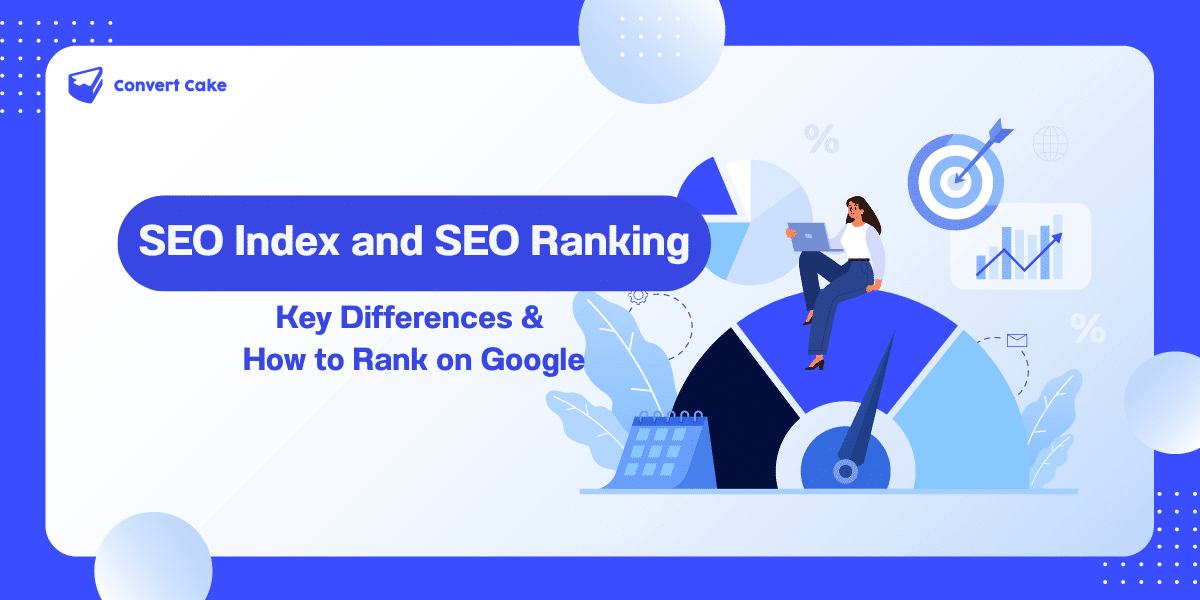
- Indexing always comes before ranking. If a page is not saved in the SEO Index, it can never rank on Google.
- Indexing is data storage; ranking is quality evaluation. These two processes work independently. Being indexed does not guarantee a top position.
- Diagnose the problem accurately, if your site cannot be found at all, check its index status. If it appears but sits far back in search results, focus on content depth, page speed, and backlinks.
Have you ever wondered why a well-crafted webpage fails to show up on Google search results at all? Or why a page that Google has already processed remains buried at the bottom of search results with zero clicks?
Confusion between these two concepts is common among website owners and beginner SEOs. Understanding what SEO Index and SEO Ranking mean and how their processes differ is the essential first step toward earning top search engine positions. A webpage that isn’t saved into Google’s system has zero chance of competing in search results. If you want to build a solid foundation right from the start, consult with the experts at Convert Cake for dedicated SEO Services.
Table of Contents
What Is an SEO Index and How Does Data Storage Work?
Before a webpage can appear on Google search results, it must pass through a filtering and storage process in Google’s core database. This step determines whether your content officially exists in the search ecosystem. For businesses seeking flawless technical execution, partnering with Convert Cake, one of the 10 Best Online Marketing Agencies in Thailand, is a proven way to minimize technical errors and accelerate indexation.
SEO Indexing in Search Engine Architecture
The process of SEO Index creation is when Google takes analyzed webpage data and stores it in a massive database (Index Database) to serve user search queries. Think of it like adding a new book to a library shelf:
- Prerequisite for Visibility: If a page is not in the SEO Index, it will not appear in search results for any keyword query.
- Binary Status: Indexing is purely binary, either “Indexed (Yes)” or “Not Indexed (No)“. Ranking positions play no role at this stage.
- The Gatekeeper Step: Being stored in the index is the mandatory prerequisite before any ranking evaluation can begin.
Step-by-Step: From Crawling to Indexing
Search engines follow a strict, sequential workflow without skipping steps. Understanding this sequence helps diagnose non-indexing issues effectively:
- Crawling: Googlebot crawls web links across the internet to discover new or updated pages.
- Processing: The system parses HTML code, text, images, and media files to comprehend the page’s subject matter.
- Indexing: Once processed, if the content meets quality standards and has no restriction directives (such as meta noindex), Google stores the page in its SEO Index database.
What Is SEO Ranking and Why Does It Matter for Businesses?
Once a webpage is stored in the database, the next step is evaluating its quality to rank it against competing pages targeting similar search terms.
Understanding SEO Ranking Meaning in a Competitive Landscape
To define SEO Ranking Meaning clearly, it is the measurement of relevance and quality of an indexed page to determine its position on Search Engine Results Pages (SERPs) for a specific query. Ranking evaluates:
- Content Relevance: How effectively the page answers user search intent.
- Authority Signals: Website structure quality, backlink profile, and User Experience (UX).
- Real-time Evaluation: Rankings fluctuate constantly based on market competition, competitor updates, and search engine algorithm shifts.
Why SEO Ranking Directly Impacts Business Success
Securing top rankings on Google’s first page is more than just a vanity metric, it directly influences revenue and online growth. Key business benefits of strong SEO Ranking include:
- Increased Organic Traffic: Most users click on the top 3 search results. High rankings consistently drive qualified organic traffic to your site.
- Brand Credibility and Trust: Top-ranked websites earn immediate trust, positioning your brand as an industry leader.
- Higher Conversion Rates: High rankings capture users actively searching for your solutions, leading to higher buying intent and conversions.
- Competitive Advantage: Dominating high-value keywords captures market share away from competitors in crowded industries.
Comparison Table: SEO Index vs SEO Ranking Meaning
Comparison Metric | SEO Index | SEO Ranking Meaning |
Primary Question | Is the page saved in Google’s database? | What position does the page hold for this query? |
Result Format | Binary (Yes / No) | Numerical position (Rank 1 to 100+) |
Timing | Occurs once after crawling | Evaluates continuously at query time |
Primary Drivers | Site architecture, XML Sitemap, Robots.txt, Noindex tags | Content quality, Search Intent match, Backlinks, UX |
Why Is an Indexed Page Not Ranking?
A frequent frustration for site owners is confirming an SEO Index status in Google Search Console, only to find the page completely missing from actual search results.
Primary Causes of Being Indexed Without Ranking
Getting into the SEO Index is merely entering the arena. Ranking on page one requires superior quality over competitors. Common reasons for poor rankings include:
- Thin Content: Shallow coverage, lack of depth, or duplicate content already present elsewhere.
- High Keyword Competition: Competing against dominant authority sites that firmly hold top positions.
- Search Intent Mismatch: E.g., a product page targeting an informational query or a blog post hard-selling too early.
- Lack of Powerful Backlinks: New sites lacking accumulated domain trust fail to outrank authoritative competitors.
If structural issues prevent your site from achieving proper indexing or if your pages are stuck without ranking movement, hiring experts saves time and resources. Work alongside Convert Cake, recognized among the Top SEO Agencies in Thailand 2026, to fix technical errors, optimize back-end SEO, and drive sustainable ranking growth.
How to Do SEO for Both Indexing and Top Rankings
Successful Search Engine Optimization requires a structured approach. Start by speeding up Google’s discovery for an SEO Index, then refine on-page factors to boost SEO Ranking Meaning for long-term growth.
How to Accelerate SEO Indexing for Faster Discovery
Relying on Googlebot to discover pages naturally can take days or weeks. Technical optimizations send clear signals to trigger faster crawling:
- Submit XML Sitemap via Google Search Console: Keep your sitemap updated and submit it directly so Google crawls new pages without waiting for routine cycles.
- Build Strong Internal Linking: Link from high-traffic, indexed pages to new URLs to pass crawl budget and authority.
- Clear Robots.txt and Meta Tag Blocks: Ensure no inadvertent disallow rules or meta noindex tags block critical pages.
Techniques to Push Your SEO Ranking into the Top 10
Once a page lands in the SEO Index, the focus shifts to upgrading content and technical signals to prove your page is the best result:
- Match Search Intent 100%: Analyze top 5 ranking competitors for target queries and build content that provides more complete, actionable answers.
- Upgrade User Experience (UX): Improve page load speed (Core Web Vitals) and ensure seamless mobile responsiveness across all devices.
- Establish Trust with E-E-A-T: Display author expertise, cite authoritative sources, and earn high-quality backlinks to reinforce your SEO Ranking and trustworthiness in Google’s eyes.
Conclusion
Understanding the distinction between SEO Index and SEO Ranking ensures your strategy stays on track. An unindexed page is like a product sitting in a locked warehouse, while ranking is its shelf placement in a store. Effective SEO starts with technical accessibility so Google can index your pages effortlessly, followed by high-quality content that drives long-term rankings.
If your site faces indexing issues, buried pages, or requires an end-to-end SEO strategy, the team at Convert Cake is ready to diagnose technical bottlenecks and scale your organic presence. Contact us today for dedicated SEO Services.
FAQ
How long does it take for a new webpage to achieve an SEO Index?
Typically 24 hours to 2 weeks, depending on website architecture, publishing frequency, and overall Domain Authority.
Can a webpage achieve a search Ranking without being in the SEO Index?
Absolutely not. Google can only rank pages stored in its SEO Index database. Unindexed pages are ineligible for ranking evaluation.
Why would a page that was previously indexed and ranking suddenly drop out of the system?
Common causes include accidental Noindex tags added during site updates, server downtime (5xx errors) blocking Googlebot, outdated content losing priority, or major Google algorithm updates.

Related Blogs

Thailand’s Top SEO Agencies in 2026: The Tested & Reviewed List for Real Organic Growth
What Is Keyword Cannibalization? How to Fix Keyword Overlap to Boost SEO Rankings
