

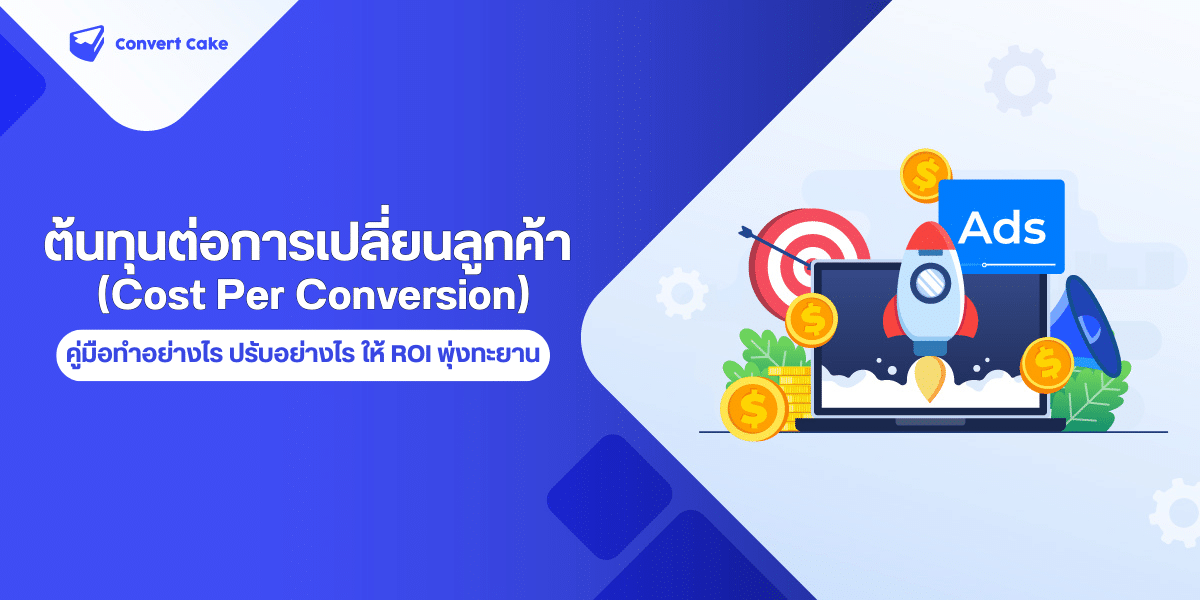
Are you tired of pouring money into marketing campaigns without a clear understanding of your return? And Do you wonder if your ad spend is truly translating into profitable outcomes, or if it’s simply disappearing into the digital ether? Many businesses struggle to connect their marketing efforts directly to tangible results, leaving them questioning their marketing ROI and campaign efficiency.
At ConvertCake, we believe in performance-driven marketing where every dollar counts. That’s why understanding and optimizing your Cost Per Conversion (CPC) is not just important, it’s absolutely critical for sustainable growth. This powerful metric cuts through the noise, showing you precisely how much it costs to achieve a desired action, whether it’s a sale, a lead, or a sign-up.
This definitive guide will demystify Cost Per Conversion, show you the exact formula to calculate it, and arm you with actionable strategies to significantly reduce it. Our mission at ConvertCake, a performance marketing agency founded in Bangkok in 2018, is to make “conversions a piece of cake” for our clients. Let us show you how to truly measure marketing effectiveness and unlock your full growth potential by our Data Tracking service.
What Exactly is Cost Per Conversion?
So, what does “Cost Per Conversion” truly mean? In the realm of digital marketing, Cost Per Conversion (CPC) is a key performance marketing metric that measures the total cost spent on a campaign divided by the number of desired actions (conversions) it generated. This “conversion” can be anything from a website purchase, a completed lead form, a newsletter sign-up, an app download, or even a phone call, depending on your specific business goals.
Why is Cost Per Conversion so crucial for my business?
Unlike vanity metrics that focus on superficial engagement, CPC zeroes in on tangible business outcomes. It tells you the direct financial efficiency of your marketing efforts, allowing you to gauge profitability and allocate budgets wisely. If you know how much a conversion costs, you can determine if that cost is sustainable and contributes positively to your bottom line.
How is it different from other common metrics?
It’s easy to confuse Cost Per Conversion with other similar metrics, but understanding the distinctions is vital:
- Cost Per Click (CPC): This metric measures the cost you pay for each click on your ad. While important for managing ad spend, it focuses on clicks, not actual outcomes. A low Cost Per Click doesn’t guarantee a low Cost Per Conversion if those clicks don’t turn into desired actions.
- Cost Per Lead (CPL): This is a specific type of Cost Per Conversion, where the desired action is the generation of a lead (e.g., a form submission with contact details). CPL is critical for businesses focused on lead generation, like B2B services.
- Cost Per Acquisition (CPA) / Customer Acquisition Cost (CAC): Often used interchangeably with CPC, especially when the conversion is a direct customer acquisition or sale. However, CPA/CAC can sometimes refer to a broader cost encompassing all marketing and sales efforts to acquire a new customer over a longer period. ConvertCake‘s experience, such as achieving a 20% CAC reduction for a dental clinic (Smile Seasons), demonstrates our focus on delivering measurable performance-driven results directly impacting your customer acquisition costs.
Focusing on CPC within performance marketing metrics allows you to allocate your budget wisely and concentrate on the activities that generate the highest profitability for your business. With ConvertCake’s expertise, this approach is further enhanced through data-driven insights and optimization Data Tracking strategies tailored to maximize ROI.
How to Calculate Your Cost Per Conversion (The Formula)
Calculating your Cost Per Conversion is straightforward once you have the necessary data. The cost per conversion formula is simple yet powerful:
Cost Per Conversion (CPC) = Total Marketing Spend / Total Number of Conversions
Let’s break down how to actually calculate it for your campaigns step-by-step:
- Determine Your Total Marketing Spend: This includes all costs associated with a specific campaign or period, such as ad spend, agency fees, creative costs, and platform fees. Be precise and ensure you’re only counting costs directly contributing to the conversions you’re measuring.
- Identify Your Total Number of Conversions: This is the total count of the desired actions that occurred within that same campaign or period. Accurate conversion tracking setup is absolutely critical here. Without reliable data on how many conversions happened, your CPC calculation will be flawed.
- Apply the Formula: Divide your total marketing spend by your total number of conversions.
Practical Examples:
Let’s look at real-world examples of calculating Cost Per Conversion (CPC):
Example 1: E-commerce Sales
- Scenario: An online store spends 10,000 THB on Facebook Ads and generates 50 sales from that campaign.
- Calculation: 10,000 ÷ 50 sales = 200 THB per sale
- Meaning: For every single sale, you spend 200 THB.
Example 2: Lead Generation Form Submissions
- Scenario: A B2B company runs a Google Ads campaign, spending 5,000 THB and receiving 25 quote request form submissions.
- Calculation: 5,000 ÷ 25 forms = 200 THB per form submission
- Meaning: For every new lead that submits a form, you spend 200 THB.
ConvertCake prioritizes transparent ROI reporting and leverages real-time dashboards alongside in-depth Data Tracking reports, ensuring our clients gain the clearest possible view of their costs and conversions.
What's a "Good" Cost Per Conversion? Benchmarks & Context
So, you’ve calculated your CPC. Now the big question: what is an acceptable cost per conversion? The truth is, there’s no universal “good” CPC. It’s a metric that’s highly contextual and depends on a multitude of factors unique to your business and campaign. How do I know if my CPC is too high? You can only truly answer that by understanding these influencing factors and establishing your own internal benchmarks.
Factors Influencing Your Cost Per Conversion
- Industry: A good cost per conversion for a B2B software company (e.g., getting a demo request) will be significantly higher than for a low-cost e-commerce product (e.g., a $10 item). B2B conversions often have higher values and longer sales cycles. Our experience across diverse sectors like education (LingoAce), healthcare (Smile Seasons), and industrial goods (Rakmao) shows varied benchmarks.
- Product/Service Price Point: Naturally, a high-value product or service (e.g., a luxury car lead like for Maserati) will justify a higher CPC than a low-price commodity.
- Marketing Channel: The average cost per conversion by industry can vary wildly across different platforms.
- Google Ads: Often higher CPC for highly competitive keywords, but users typically have high intent.
- Facebook Ads: Can offer lower CPC due to precise audience targeting capabilities, but intent might be lower.
- TikTok Ads: Emerging platform, potentially lower CPC in some niches due to less competition, but requires unique creativity.
- Campaign Objectives: A campaign focused on brand awareness will naturally have different conversion goals (and thus CPC expectations) than one focused on direct sales.
- Geographic Market: CPCs can differ dramatically based on location. The cost per conversion benchmarks in a competitive market like Thailand might be different from those in Western markets due to differing advertising costs and audience behaviors.
Establishing Your Own Benchmarks
Instead of chasing an arbitrary “good” number, focus on your business’s profitability.
- Internal History: Analyze your historical performance to establish your own cost per conversion benchmarks.
- Profitability: The ultimate measure of a “good” CPC is whether the acquired conversion (customer) is profitable over their lifetime. Consider your customer’s Lifetime Value (LTV) and your profit margins. If your average customer brings in $1000 in profit over their lifetime, a CPC of $50 is fantastic, but a CPC of $200 might be too high for a product with a $10 profit margin.
At ConvertCake, we take an “owner’s perspective,” meaning we deeply understand your unique business context and financial goals. Our Data Tracking approach helps you set realistic, profitable CPC targets rather than relying on generic benchmarks.
Proven Strategies to Effectively Reduce Your Cost Per Conversion
Reducing your Cost Per Conversion isn’t about cutting corners; it’s about smarter, more efficient marketing that delivers better results for less. With accurate Data Tracking, you can identify exactly which campaigns, channels, and audiences drive the most profitable actions, allowing for precise optimization. Here are some proven strategies to reduce your CPC that ConvertCake implements for its clients:
Optimize Your Ad Campaigns & Targeting
Your ads are the gateway to your conversions. Making them highly relevant and engaging is crucial to optimize ad spend.
- A/B Test Everything: Continuously test different ad creatives, copy, headlines, and call-to-actions. Small tweaks can lead to significant improvements in click-through rates and ultimately, conversion rates.
- Refine Audience Targeting: Precision is power. Use detailed demographics, interests, behaviors, and custom audiences to ensure your ads are seen by those most likely to convert. For facebook ads cost per conversion and tiktok ads strategy, granular targeting is key.
- Utilize Negative Keywords: For google ads cost per conversion, adding negative keywords prevents your ads from showing for irrelevant search terms, saving you money on clicks that won’t convert.
- Smart Bid Strategies: Leverage automated bidding strategies (e.g., “Maximize Conversions” or “Target CPA”) offered by platforms. These use AI to bid more efficiently for conversions.
- Platform Specifics: ConvertCake specializes in creating “high-impact ads” on platforms like Facebook, Google, and TikTok, driving “real business results.” Our expertise ensures your Google Ads, Facebook Ads, and TikTok Ads strategy are finely tuned for efficiency.
Enhance Landing Page Experience
Even the best ad will fail if the landing page disappoints. Your landing page is where the conversion happens, so landing page optimization is paramount.
- Speed & Responsiveness: Ensure fast page load times and mobile-first design. Slow or non-responsive pages are immediate conversion killers.
- Clear, Compelling CTA: Your Call-to-Action should be prominent, benefit-driven, and easy to find.
- Concise & Persuasive Copy: The messaging on your landing page must directly align with your ad copy and clearly communicate the value proposition. Address user pain points and offer solutions.
- Simplified Forms: Minimize the number of fields in your forms. Only ask for essential information. Every extra field can increase friction and reduce conversions.
- Trust Signals: Include testimonials, security badges, privacy policies, and credible social proof to build confidence.
ConvertCake‘s Data Tracking Strategy and Growth Marketing services focus on optimizing every touchpoint of the customer journey, ensuring your landing pages are built to improve conversion rate and deliver results.
Leverage AI-Powered Nano-Influencer Scaling (ConvertCake's Edge)
This is where ConvertCake truly stands apart. Can AI help reduce my conversion costs? Absolutely. We’re at the forefront of AI marketing cost reduction through nano influencer marketing.
- We leverage advanced AI-powered screening tools to identify and collaborate with nano-influencers in bulk. These are individuals with smaller, highly engaged, and authentic audiences, often seen as more trustworthy than celebrity influencers.
- Reduced Costs: Our validated approach has shown that by using AI to screen and manage nano-influencers, we can reduce costs by up to 50% compared to traditional influencer marketing.
- Enhanced Authenticity: AI helps us find influencers whose content and audience genuinely align with your brand, fostering authentic engagement and higher trust.
- Higher Engagement & Efficiency: By improving influencer selection efficiency with AI recommendation features, we ensure more effective partnerships and engagement, leading to a significantly lower CPC with AI.
This innovative approach allows us to achieve better targeting and a more genuine connection with audiences, resulting in more cost-effective conversions. It’s a key differentiator that provides a powerful edge for our clients, driving measurable results and demonstrating our commitment to innovation.
Refine Your Conversion Funnel
Reducing CPC isn’t just about individual elements; it’s about optimizing the entire customer journey. Conversion funnel optimization involves meticulously mapping and improving every step.
- Map the Customer Journey: Understand how users interact with your brand from their initial touchpoint to the final conversion.
- Identify Drop-Off Points: Analyze analytics to pinpoint where users are abandoning the process. Is it on a specific page, during checkout, or after clicking an ad?
- Implement A/B Tests: Test different variations at each stage of the funnel to remove friction and improve user experience (UX).
- Utilize Retargeting Campaigns: Don’t let interested but unconverted users slip away. Retargeting strategies re-engage them with tailored messages, bringing them back to complete the conversion at a potentially lower cost.
- Continuous Optimization: Focus on user experience (UX) and continuously improve based on insights. ConvertCake’s services, combined with our proactive approach in recommending new strategies to enhance performance, enable us to deliver effective conversion funnel optimization and customer journey mapping.
Measuring Success: Beyond Just Cost Per Conversion
While Cost Per Conversion is a vital metric, it’s crucial not to view it in isolation. What other metrics should I consider alongside CPC? To truly understand your marketing ROI and holistic marketing strategy, you must consider CPC within the broader context of your business profitability.
- Lifetime Value (LTV): A high CPC might be perfectly acceptable if you’re acquiring a customer with a high customer lifetime value. For example, for a B2B construction company like Rakmao, a higher initial CPC for a new client might be justified if that client generates substantial revenue over several years.
- Overall Return on Investment (ROI) & Profit Margins: Always align your CPC goals with your overall business objectives and profitability metrics. Is the cost of acquiring a conversion leading to a positive net profit? ConvertCake’s “owner’s perspective” ensures we focus on delivering record-high revenue and reduced CAC that directly impacts your bottom line, as seen in projects for Jaspal & Sons Co., Ltd. and Smile Seasons.
- Transparent ROI Reporting: We believe in absolute clarity. Our commitment to “transparent ROI reporting” means you always know how your CPC fits into your broader financial picture, empowering you to make strategic decisions that truly drive growth. ConvertCake understands and cares for your brand “as deeply as you do,” ensuring our strategies serve your long-term success.
Ready to Make Conversions a Piece of Cake?
Understanding and optimizing your Cost Per Conversion is fundamental for building profitable digital marketing campaigns and achieving sustainable business growth. We’ve shown you how to accurately calculate it, understand what a “good” CPC means for your unique business, and implement powerful strategies to reduce your optimization conversion costs. From refining ad campaigns and enhancing landing pages to leveraging ConvertCake’s unique AI-powered nano-influencer scaling and optimizing your entire conversion funnel, the path to digital marketing success is clear.
At ConvertCake, our expertise in delivering client-centric, performance-driven results, and Data Tracking makes “conversions a piece of cake” for businesses across Thailand and beyond. We are committed to an “owner’s perspective” and our “4 promises” ensure a healthy, results-oriented partnership.
It’s time to stop guessing and start growing with confidence. Take the next step towards achieving your own optimized conversion goals and truly maximizing your marketing ROI.

Related Blogs
What is Marketing Mix Modeling (MMM) & Does It Increase Profits?
What is an Advertising Agency? Types, Differences, and How to Choose One to Scale Revenue
