

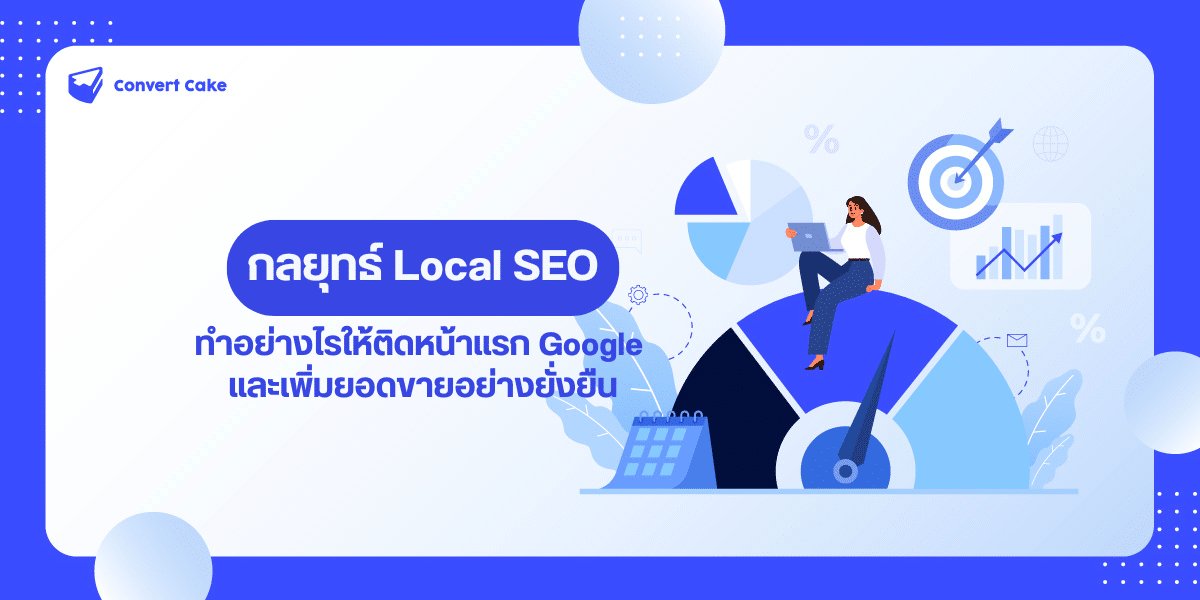
Key Takeaways
- Local SEO helps small and medium-sized enterprises (SMEs) secure a spot on Google’s first page easily by targeting specific geographic areas, reducing competition and keeping marketing costs manageable.
- To push your business profile into the top 3 spots on Google Maps (Local Pack), you must combine continuous Local SEO and Google My Business Optimization with structured content alignment on your main website.
- Users searching for local services already have an immediate need to buy (High Purchase Intent). Local SEO makes it easier for them to find your business, leading to higher conversion rates and faster customer decisions to call or visit your storefront.
Have you ever faced these problems: “Ran out of ad budget but sales are flat?” or “Have a physical storefront but invisible on Google?” Many businesses drain their ad budgets on broad keywords with high costs-per-click (CPC) only to get low returns. This is incredibly common for location-specific businesses like clinics, restaurants, hotels, or repair services, showing that their current marketing strategy is missing the mark.
In reality, you don’t need to attract audiences nationwide. You only need to be the first choice for nearby users who are already looking to buy. This is why a targeted Local SEO strategy has become a high-performance marketing tool to build a solid sales foundation without relying on 24/7 paid ads.
Convert Cake, an SEO agency specializing in Performance Marketing and conversion optimization, deeply understands local search behaviors. We turn organic traffic into actual storefront sales through technical execution and precise Google My Business Optimization. For businesses wanting to stop guessing and turn their website into a long-term revenue-generating asset, choosing professional SEO Services is the crucial first step to analyze market gaps, target high-intent local keywords, and build a sustainable competitive edge.
Table of Contents
What is Local SEO? Why Modern Businesses Can't Ignore It
Today, search behavior on Google has shifted dramatically. Nearly half of all searches are no longer just for general information, but to find where to buy or access nearby services immediately. For brick-and-mortar businesses, failing to capture local traffic means handing high-quality customers over to online competitors. Understanding location-based marketing is essential to turn digital searchers into physical foot traffic.
Definition of Local SEO and How It Works with Google Search
Local SEO is the process of optimizing your website, content structure, and online profiles to be highly visible and accessible. This signals search engine algorithms (especially Google) to understand exactly where your business is located, how to get there, and which specific areas you serve. It directly answers user queries like “cafes near me,” “restaurants near me,” or “tourist attractions near me” when they are exploring an area.
The mechanics of Local SEO rely on matching two main data points:
- The User’s Geographic Location: Analyzed via mobile GPS or IP address.
- The Completeness of Your Business Data: Driven by your Google My Business Optimization and localized website content.
When Google detects a search with local intent, it processes this data and instantly displays the most relevant local businesses in prominent positions, both in organic search results and on Google Maps.
Differences: Global/National SEO vs. Local SEO
Effective local marketing requires distinguishing between these two SEO models, especially now that Google uses AI Overview to organize search results. Understanding both structures ensures your data serves both traditional search algorithms and AI engines.
- Global/National SEO: Focuses on ranking broad keywords with high search volume to drive traffic nationwide or globally, regardless of distance (e.g., “how to take care of facial skin” or “accounting software”). This model faces fierce competition from large corporations and has a longer marketing funnel. Furthermore, on general search results, AI Overview often extracts informational content from massive sites to summarize answers directly on the first page, which can reduce click-through rates for standard websites.
- Local SEO: Focuses strictly on search queries with geographic intent, such as specific areas, districts, or provinces (e.g., “skin clinic Chiang Mai” or “accounting firm Nonthaburi”), as well as automatic “near me” queries. This narrows the competition down to businesses within the same radius. When Google detects local intent, its AI Overview processes the data alongside your optimized Google My Business profile to recommend local businesses at the very top of the summarized answer. Local SEO serves as a shortcut to get recommended by AI, driving high-intent customers straight to your store.
Adapting your website’s structure to handle these changes requires technical schemas and precise backend data linking. For businesses preparing to capture customers in the era of Search Generative Experience, choosing SEO Services from Convert Cake, one of 10 Best Online Marketing Agencies in Thailand, will help your brand rank sustainably on Google.
3 Reasons Why Your Business Needs Local SEO
Targeting your local digital market is like securing prime real estate before your competitors do. Especially today, as Google reshapes its search engine results pages with AI technology, building your brand and establishing a strong local presence through Local SEO has become a critical necessity that directly dictates the growth of brick-and-mortar businesses. Setting up this digital framework provides three major long-term business advantages:
1. Significantly Lower Competition
While national SEO forces you into a directionless battle against massive websites, Local SEO narrows the playing field down to businesses within your immediate radius. This allows small and medium-sized enterprises (SMEs) to rank on Google’s first page and AI Overview quickly without spending massive budgets to fight deep-pocketed competitors.
2. Capturing High Purchase Intent Audiences
Consumers who type in specific locations or use “near me” phrases are usually at the bottom of the marketing funnel. They have an immediate need and are ready to visit a store or make contact right away. Combining this with thorough Google My Business Optimization yields higher conversion rates than general searches because you satisfy their needs precisely when they are ready to buy.
3. Low Maintenance Costs and Compounding ROI
Optimizing your website and ranking locally builds a permanent digital asset for your brand. Once your rankings stabilize, high-quality organic traffic from local customers will flow into your business 24/7 with zero cost-per-click (CPC) fees. This continuously lowers your Customer Acquisition Cost (CAC) and delivers compounding returns over time.
Setting up this system correctly under modern algorithm guidelines eliminates errors and builds rapid advantages. To turn local traffic into actual revenue, choosing SEO Services with an SEO agency like Convert Cake ensures you can spot market gaps, target profitable local keywords, and secure sustainable rankings on Google.
3 Core Ranking Factors of Local SEO
Google does not randomly pick businesses to display on the first page or the Local Pack. The algorithm calculates complex datasets systematically to provide the best user experience. To turn online traffic into sales, you must align your business data with these three core ranking factors:
1. Relevance
This measures how well your business information matches the user’s search intent. Google scans everything from your business name, categories, and profile description to your main website content.
Example: If someone searches for “Invisalign clinic Ladprao,” a clinic that completed Google My Business Optimization with “Dental Clinic” as its primary category, specifies “Invisalign services,” and includes the location keyword “Ladprao” will earn a high relevance score. It will rank ahead of a business that only uses a broad description like “Dental Clinic.”
2. Distance
The physical distance between the user’s current location (calculated via mobile GPS, network signals, or IP address) and your business. The closer you are to the user, the higher your chances of ranking at the top.
Example: When a user in Thonglor searches for “coffee shop near me,” Google calculates the radius and shows coffee shops within 500 meters to 1 kilometer first. While you cannot move your physical store, you can optimize for this technically by defining your Service Areas and entering precise location addresses across all platforms.
3. Prominence (Online Reputation & Authority)
How popular and trustworthy your business appears to Google, evaluated through your total online digital footprint. This is measured by the number and score of reviews, user engagement rates, high-quality links pointing back to your site (Backlinks), and brand mentions (Citations) across various websites.
Example: If two spas are equidistant from a user, and Spa A has 150 5-star reviews, consistent user interactions, and travel blogs linking back to its site, while Spa B only has a map pin with 2 reviews, Google will rank Spa A first because it has proven real-world authority and community trust.
How to Cover All 3 Core Ranking Factors
- Maximize Relevance: Achieve complete Google My Business Optimization by refining your primary and secondary business categories to be as specific and precise as possible to match your actual operations.
- Optimize Distance: Verify and lock your exact latitude and longitude coordinates in your map backend to prevent pin drifting, maintaining your location accuracy and broadening your ranking radius.
- Build Prominence: Establish continuous Profile Engagement by posting news, uploading product photos, and encouraging actual customers to write reviews and give star ratings to build your reputation score over competitors in the same area.
To deep-dive into the algorithm and fully leverage these 3 factors for rapid, sustainable sales, choosing professional SEO Services will help evaluate your local competitors and design a precise action plan without wasting time on trial and error.
Combined Google My Business, On-Page, and Off-Page Strategies for the Local Pack
Securing a spot on Google’s first page, specifically the top 3 spots of the Local Pack, and being picked up by AI Overview requires a 360-degree approach. A simple map pin is not enough; you must link your map profile, website structure, and external signals together.
1. Google My Business Optimization
Your digital map profile is your front door for local customers. Manage it through these core pillars:
- Technical Data Formatting (NAP Consistency): The foundation of Local SEO relies on matching NAP data (Name, Address, Phone). The text on your map profile must match your main website and other online channels letter-for-letter. Your profile name should blend your brand name with your primary keyword naturally so Google knows exactly what you do and where you are, avoiding keyword stuffing that triggers spam penalties.
- Proactive Reviews and Content Updates (GMB Posting): High-quality reviews containing specific service keywords from real customers serve as powerful ranking boosters. Google uses this to measure your popularity and trust. Additionally, regular GMB Posting about events, new products, news, or promotions signals to Google that your business is active and open.
Checklist for Google My Business Optimization:
- Structure Your Profile Name: Use the format [Brand Name] + [Primary Keyword/Service Type] (e.g., Cake Dental Clinic & Braces Rangsit) for clarity and safety against bans.
- Select All Relevant Categories: Choose your Primary Category and Secondary Categories accurately to match your actual operations.
- Write an Engaging Description: Craft a 4-5 line description explaining your brand highlights while weaving in local keywords naturally.
- Proactive Image Uploads: Add high-resolution photos of your storefront, interior, team, and products (at least 8-10 photos to start) and keep uploading new ones regularly.
- Build a Review Management System: Respond to all customer reviews, both positive and negative, within 24-48 hours to increase profile engagement.
2. On-Page SEO and Map Embedding Techniques for Main Websites
Your main website is your core base for driving conversions. Aligning your On-Page SEO with geographic content passes link equity back and forth between your website and your map pin, growing both simultaneously.
- Designing Local Location Pages: If your business has multiple branches or targets multiple areas, build dedicated landing pages for each location instead of cramming everything onto the homepage. This allows you to tailor content, images, and contact details specifically to the behavior and needs of local users in that market.
- Technical On-Page and Long-Tail Location Keyword Structure: Injecting locations (districts, areas, or provinces) into your website’s HTML tags is a vital Local SEO technique. Ensure this data is included in:
- Title Tag & Meta Description: The header and snippet shown on Google search results.
- Heading Tags (H1, H2): The main and subheadings of your content.
- Image Alt Text: Text descriptions that help Google bots index your photos into local algorithms accurately.
On-Page Optimization Guidelines for Local SEO:
- Long-Tail Keyword Structure: Use the formula [Business Type/Service] + [Location/Area] across your content (e.g., luxury car rental Thonglor, cardboard box factory Pathum Thani). These terms face less competition but yield high conversion rates.
- Smart Map Embedding (Embed Google Map): Embed the Iframe map code from your Google Business Profile directly into your specific Location Page content. Avoid embedding it in the global footer, as this can slow down your site’s overall page speed.
- Hyper-Local Content Creation: Write content tailored to local needs, such as travel directions, nearby parking landmarks, local success stories, or customer case studies from that specific area.
3. Off-Page Strategies and Local Citations for Sustainable Rankings
Internal tweaks alone aren’t enough in highly competitive areas. Off-Page signals act as external vouchers confirming to Google that your business is real, operational, and recognized by the community.
- Building Local Citations from Listing Sites and Local Media: Registering your core business information (NAP) on trusted local business directories builds a network of references known as Local Citations. Platforms like Wongnai, YellowPages, Tripadvisor, or industry-specific directories called Local Citations reinforce Google’s confidence in your data when it matches your Google My Business Optimization details.
- Harnessing Social Media and Local Backlinks for Location Verification: Social signals and Backlinks from location-relevant external sources reflect local endorsement. When regional travel bloggers or local community news sites write about your business and include a backlink to your site, combined with customers checking in on Facebook, Instagram, or TikTok, it accelerates your profile authority and search rankings.
Actionable Off-Page Implementation Guidelines:
- Update Popular Listing Sites: Register and maintain your business data on directory websites, ensuring your spelling, punctuation, and phone numbers perfectly match your Google My Business profile.
- Build Local Partnerships: Collaborate with neighboring businesses, local trade associations, or suppliers to exchange natural, high-quality local backlinks.
- Drive Offline Campaigns Online: Run in-store promotions or events that encourage customers to take photos, check in, write blog reviews, or share links on social media to generate continuous brand mentions.
Linking technical execution, On-Page content, and Off-Page signals together ensures your business ranks on Google’s first page sustainably. If you want a digital framework built to international standards, choosing specialized SEO Services with an agency like Convert Cake, a leading Top SEO Agencies in Thailand 2026, will unlock your business potential and turn local traffic into steady sales.
Conclusion
Local SEO is a precise, structured digital framework, not guesswork. It demands a coordinated approach from Google My Business Optimization to tailored On-Page and Off-Page settings that feed into algorithms and AI Overview systems. Securing the first page of local search early gives your business an immense advantage in capturing high purchase intent audiences, driving steady organic traffic to your storefront, and cutting long-term ad spend.
Local SEO doesn’t just make your map pin and website look attractive; it unlocks your true geographic market potential. Choosing proactive SEO Services with a professional agency like Convert Cake ensures you can analyze market gaps, plan profitable keyword strategies, and effectively convert online traffic into physical storefront sales.
FAQ
Which one should I focus on first between the Google My Business profile and the main website for Local SEO?
For the best results, both should be optimized simultaneously from day one. This is because the technical SEO structure on your main website (such as embedding Schema Markup and the Google Map Iframe) passes digital authority to push your Google My Business profile into the Top 3 Local Pack with long-term stability. Meanwhile, your Google My Business listing acts as the frontline touchpoint to capture high-intent local buyers and drive qualified traffic back to your main website.
Does it really affect my rankings if my Name, Address, or Phone number (NAP) formatting on social media doesn’t match my Google My Business profile?
Yes, it directly impacts your rankings. Any variations or discrepancies in your NAP formatting, such as spacing, abbreviations, or missing numbers, will confuse Google’s automated verification bots. This confusion lowers your trust score within the Prominence factor and hurts your Local Citations network, which can trigger a sudden drop in your search rankings.
Can I still execute Local SEO and set up a Google My Business listing if my business operates as a mobile service without a permanent physical storefront?
Yes, absolutely. Google accommodates these business models through a dedicated framework called a Service Area Business. During the setup process, you can easily configure your target service areas by specifying the exact districts, neighborhoods, or provinces your team services, while choosing to hide your primary registration address (such as a private residence) from public view for privacy and safety.

Related Blogs
Thailand’s Top SEO Agencies in 2026: The Tested & Reviewed List for Real Organic Growth
What Is Keyword Cannibalization? How to Fix Keyword Overlap to Boost SEO Rankings
